There are no new movies opening in regular release this week, and a lot of the usual theaters that frequently appear in this space either aren’t showing anything at all, or are holding over older programming. The AFI has already gotten started on its traditional long, retrospectiveless January, and none of the Smithsonians have anything going apart from the usual lineup of IMAX screenings. (Speaking of which, why no love for Avatar on IMAX, Smithsonian? Forcing IMAX lovers to see it on the ripoff fake IMAX screens is unfortunate.) We should mention that E Street is presenting the local premiere of Scott Sanders’ remarkably period-accurate looking Blaxploitation spoof, Black Dynamite, at midnight Friday and Saturday, with Sanders in attendance.
With the lack of new movies and a quiet week on the repertory screens, it’s the perfect opportunity to take a look back at 2009. I’m never one to pass up a good listmaking opportunity, so here are my favorite movies of the year. The good news is that half of these are still playing in theaters, and one of these (my #1, in fact) doesn’t hit D.C. until later in January, so there’s still plenty of opportunity to check these out on the big screen.
- The White Ribbon
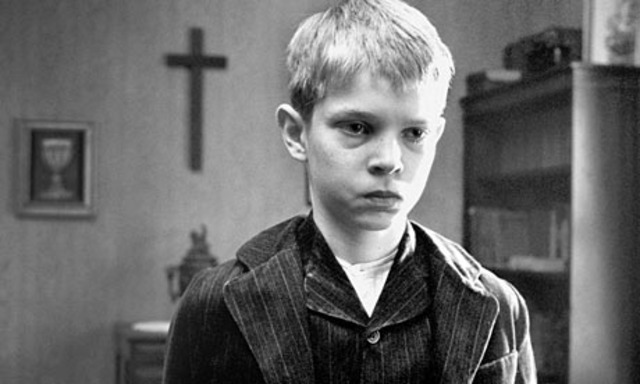
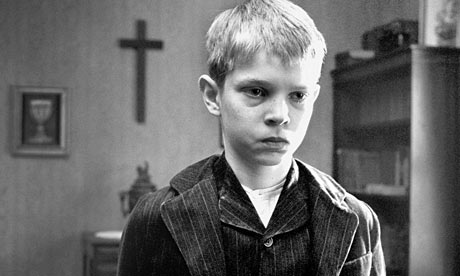
In Top Gun, Val Kilmer’s Ice Man earned his nickname via the cold, calculated perfectionism that marked his flying. Michael Haneke is sort of the cinema equivalent. Even when his films are violent or shocking (as they often are), there is still an emotional distance from the material. The dispassionate precision makes the audience acutely aware of the meticulous thought that goes into their construction. That’s not a complaint; Haneke makes the detachment work for him, and has developed during the last decade into one of the most important filmmakers working. It should come as no surprise, then, that he closes out that decade with a film that is technically and intellectually flawless.The White Ribbon, a period piece shot in stark black and white, and set in a small Austrian village just before the start of the first World War, follows the lives of these villagers as they try to determine the cause of a number of odd occurrences. As Haneke lets these people and their prejudices and power plays work their way toward ugly act after ugly act, he casually and subtly presents, in microcosm, the human source of fascism, terrorism, and religious oppression. It’s more akin to a massive sculpture, carved and polished in marble and in a museum, than a movie. Yet for all its emotionless coldness, it is no less engrossing, and no less brilliant.