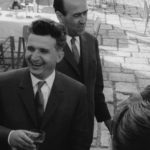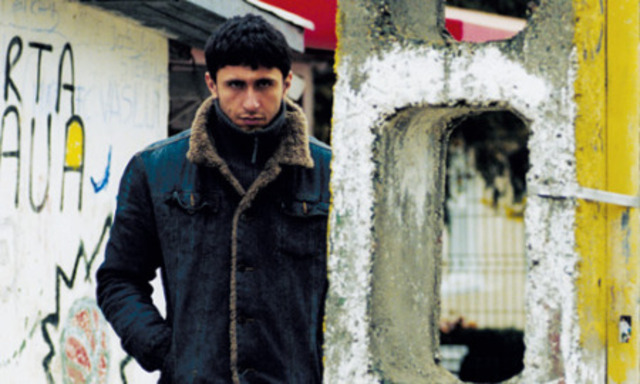
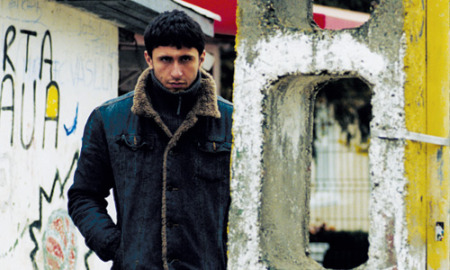
 Twenty years after the death of Nicolae Ceauşescu, Romanians are still sorting through the legacy of his iron-fisted regime. This is especially apparent in the fantastic new wave of Romanian cinema of the last decade, as the country’s filmmakers are consistently fascinated with their totalitarian past and its aftermath. Even in a film like Corneliu Porumboiu’s Police, Adjective, which is set in the present and contains no direct references to Ceauşescu, the man’s shadow still looms over the proceedings.
Cristi (Dragoş Bucur) is a young detective assigned to stake-out a high school kid suspected of drug trafficking. It becomes readily apparent to Cristi that the kid isn’t a dealer, no matter what his stool pigeon buddy – who has dubious motives in turning in his friend – has to say. Yet his superiors keep pressing for an arrest, even as Cristi begins to experience moral qualms about potentially ruining the life of some kid who, by all appearances, just likes to smoke the occasional joint in the schoolyard.
Porumboiu’s film is, on the surface, a reversal of cop-movie clichés that responds to the stereotypical elements of police flicks (car chases, gun fights, apoplectic commanding officers, etc.) with a more realistic version of police work. That is to say, mind-numbing boredom, and lots of waiting. I didn’t have a stopwatch handy to measure, but it’s fair to say that at least half of the 115 minutes of Police, Adjective are occupied by nothing at all, just shots of Cristi watching and waiting for something, anything to happen.