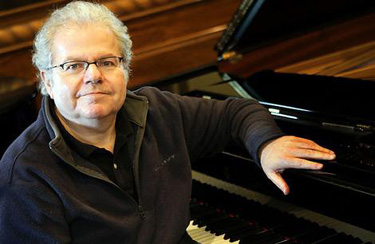
 Pianist Emanuel Ax (photo courtesy Boston Symphony Orchestra)
The National Symphony Orchestra has been in a sort of leadership vacuum this season, with a carousel of guest conductors filling time until Christoph Eschenbach takes the helm next season. While the results have been varied, the month of January is shaping up to be, as expected, one of the best in recent memory for the hometown band. After a lovely performance of Elgar’s violin concerto last week, with former NSO music director Leonard Slatkin, the podium featured the return of Michael Stern, who has been putting in some solid work as music director of the Kansas City Symphony. The exciting program combined two symphonies of the 20th century with an old favorite, Beethoven’s second piano concerto, played by another old favorite, pianist Emanuel Ax.
Ax, whose classic recordings of Beethoven have focused mostly on the chamber music, has still got it. Much about the performance was understated, and pleasantly so, with the first movement being more amiable than the Allegro con brio marking might indicate. Ax’s solo entrance had a gentlemanly flair, and the cadenza (the one created by Beethoven himself) was more professorial than virtuosic, with thick pedaling that blurred much of the harmony. The second movement was similarly well played, but not over-mannered, with its dreamy closing played in a hushed and unpretentious way. The high point, though, was a brisk and playful third movement, with that dancing melody always light, the attack crisp but not pointed. It was a veteran interpretation of a work one might take for granted: not straining to make the concerto sound more daring than it is, but comfortable in its skin.