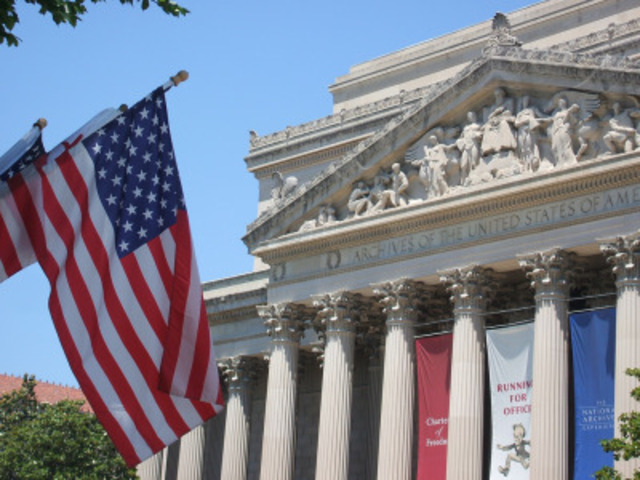
 Photo by slack13
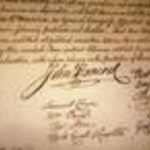
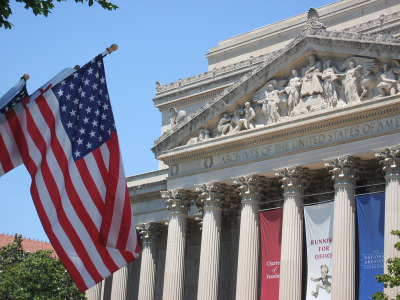
The Washington Post noted this morning that the National Archives will soon ban photography by visitors who have come to see the Declaration of Independence and other founding documents in their main exhibition hall. Currently, photography — with no flash — is permitted in the hall. After the change, professional photographers and media can still arrange with the Archives to take pictures; tourists will be allowed to bring their cameras (and cell phones, video cameras, etc) into the hall but will be warned by the guards if they use them, and escorted out of the building if they ignore the warning.
Some in the photography community have already expressed barely controlled outrage at the change. Here at DCist, we’re big supporters of photographers’ rights and find it crucial to protect them generally, especially in the nation’s capital, where “security” fears can be overreaching. But we’re having a little trouble getting too riled up about this change. The National Archives can certainly be faulted for notifying the public that the rule was open for comment only in the Federal Register, where few of those visitors were sure to see it. (Three people replied, all against the change; all three arguments are specifically refuted by the Archives in the final rule.) Not to mention the reason the documents are more threatened by flash photography is because of a change in their own preservation system. Up until 2003, the documents were kept under glass that had filters to block harmful light (UV and certain visible light), but the filters also caused the documents to appear greenish. To “improve the visitor experience,” the filters were removed and placed on the light fixtures instead. The change allowed people to see the documents in true color, but also left them vulnerable to the mis-use of flash photography.