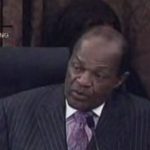
 If you weren’t tuned in to Channel 13 this morning, you missed an extraordinary presentation by former Skadden attorney Robert Bennett on his findings from the ethics investigation into Ward 8 D.C. Council member Marion Barry. Bennett, alongside his associate, Amy Sabrin, today laid out in great detail how they found Barry had repeatedly violated ethics laws when he funneled city money to his personal friends and associates, including his former girlfriend, Donna Watts-Brighthaupt.
Among the details revealed today was that Barry associate Rev. Anthony Motley, who is currently running for an Ward 5 At-large D.C. Council seat, personally received at least $50,000 from three different earmarked grants that were funneled through the Ward 8 office.
But even more shocking were findings that Barry had been in the habit of giving checks from the city to Watts-Brighthaupt, who was employed by Barry as a city contractor at the time, and then asking her to cash them and give him some of the money. The implication was that not only had Barry improperly hired his girlfriend to do questionable work, but Barry himself had received kickbacks thanks to the arrangement.
“Mr. Barry mounted a concerted effort to breach the high ethical standards expected of him,” Bennett told the Council. “His conduct not only appeared to be improper, but was improper.” The report recommends Barry’s conduct be referred to the office of the U.S. Attorney for possible criminal prosecution, as well as to the Office of Campaign Finance.
Barry took some time to respond to the report’s findings at the hearing, arguing that the council has no formal rules barring a council member from hiring someone with whom they have a romantic relationship. Bennett’s response? That standard is fully implied by existing ethics and conflict of interest laws.
Bennett also accused Barry of failing to cooperate fully with his investigation and in fact trying to impede it. Bennett said that on at least four occasions Barry attempted to intimidate Watts-Brighthaupt and convince her not to provide accurate testimony.
Barry wasn’t the only council member whose abuse of earmarks was taken to task by Bennett and Sabrin, although he was the only one mentioned by name at today’s hearing. The two lawyers recommended that earmark grant making as currently practiced by the D.C. Council should end completely, due to a systemic lack of accountability and oversight in their administration. At least one council member, Ward 7’s Yvette Alexander, bristled at the suggestion that all earmarks should end. And for his part, Barry stood firm on his efforts to identify grant money to help poor Ward 8 residents.
“I’m a different kind of council member,” Barry said. “I ran to get resources, to uplift the people of Ward 8.”