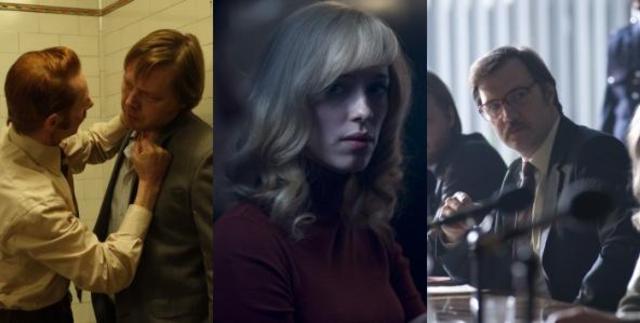
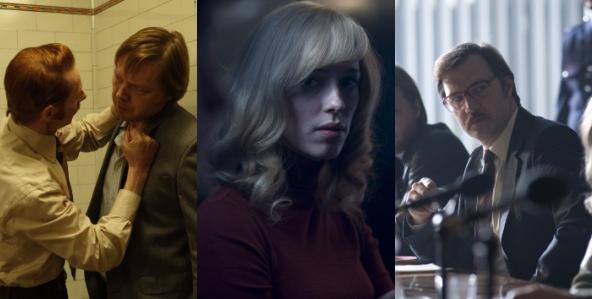
It seems like a slur to call the Red Riding trilogy a “TV movie”, but that’s where it first aired, on Britain’s Channel 4, a year ago. The trio look, feel, and were produced as big screen features though, and it’s nice to see that IFC has picked them up for limited screenings throughout the U.S., hitting D.C. this week. These films deserve to be viewed in a theater.
Based on a quartet of novels by David Pearce, the films follow a series of possibly related serial killings in the Yorkshire region of the U.K. over the course of nine years. Each film captures a particular investigation — in the year stated in each film’s title — with the protagonist of each story changing, but many of the supporting characters remaining the same (and, in one case, emerging from the shadows to take the lead role in the final film). While all three films were written by Tony Grisoni, three different directors were hired to film each one; the result is a series that maintains a consistent tone while allowing for stylistic variation among the directors, whose only mandate from the start seems to have been to keep the proceedings unrelentingly grim.
Starting in 1974, the first film is the most striking and risk-taking of the three, something of a surprise for those who may only know its director, Julian Jarrold, from his sedate BBC adaptations of classic literature from the likes of Waugh, Dickens, and Dostoyevsky. But here he sinks himself into a cold-sweat fever dream of a noir, following Eddie Dunford, a young, tragically hip, hopelessly naïve crime reporter for the Yorkshire Post, played with just the right blend of swagger and ineptitude by Andrew Garfield. As Dunford investigates the possible connection between the recent disappearance and eventual murder of a young girl and a number of similar cases in past years, he finds himself pulled into a web of police and business collusion and corruption, as well as an affair with the mother of one of the girls. Jarrold shoots the film on 16mm, which gives it a nice 70s texture and grain, while putting the young reporter through a frighteningly violent series of encounters with the cops.