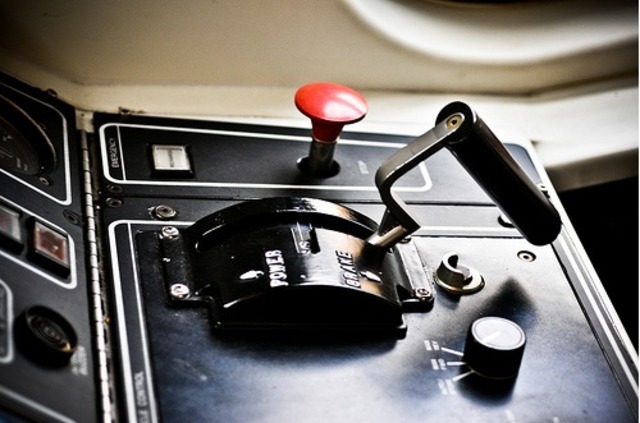
 Photo by Chris Rief aka Spodie Odie
The standard spiel from WMATA for the past eight months has been that the switch to manual operation after the June 22 Red Line crash has been the source of nearly all rider woes since then. Jerky stops and starts? It’s the manual operation. Longer headways between trains? Related to manual operation. Overcrowded train cars when they do come? Metro is just less efficient in manual operation.
The Examiner’s Kytja Weir today takes a closer look at Metro performance over the past eight months, and finds there’s actually another factor that’s also to blame: self-imposed speed restrictions. Ever wonder why your train seems to slow down to a crawl in certain parts of the tunnel, only to speed back up again shortly thereafter? Turns out there are dozens of spots in the Metrorail system where speed restrictions have been imposed lately, according to an internal Metro report Weir got her hands on.
Some operators say manual operations are being used as an excuse for a broader trend of increasingly bad track problems — many of them found after the crash when a track circuit failed to show a train stopped on the tracks.
The number of speed restrictions varies, as does the length of time it takes to solve the underlying problem on the aging system. Metro said it had 36 speed restrictions Tuesday, down from the 59 listed on the Feb. 16 internal report.
This just rings as undeniably true for regular Metro riders. As Interim General Manager Richard Sarles prepares to take charge of the troubled transit agency, he’s confronted with a system that’s rapidly deteriorating, no longer providing reliable service, and under fire for poor safety controls. Whether Sarles will even have time to attempt to strike a balance between keeping safety a number one priority and getting the trains running smoothly again remains to be seen, but it will be a key measure of the success or failure of whomever ends up in the job in the long term.