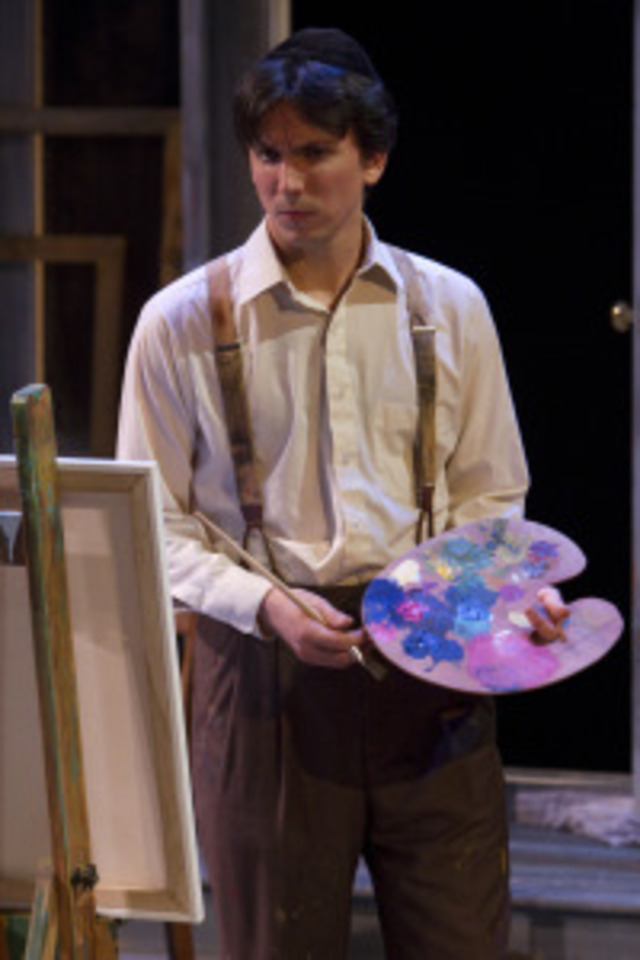
 Alexander Strain in My Name Is Asher Lev.
The archetype of the misunderstood artist is explored to insightful, intimate effect in Round House Theater’s My Name Is Asher Lev.
The thoughtful, character-driven piece watches the title character (Alexander Strain) proceed, semi-chronologically, from childhood to maturity, navigating between his passion for painting and his household’s traditional Jewish upbringing. And while the synopsis sounds a little cliched, Asher Lev never feels like it: its characters are achingly human, its conflicts urgent.
Lev’s prodigy as an artist is evident even in his youngest years, but gets sidetracked by a discouraging father and a life tragedy. Lev really gets the opportunity to evolve when a fellow, outspoken artist (“It is my nature to be blunt,” he says to laughs) takes him under his wing. There, Lev’s talent flourishes – but his subject matter becomes more and more controversial to the likes of his conservative parents.
Asher Lev discusses whether art is inherently linked to selfishness, and the realistic, heartbreaking portrayal of how Lev’s work affects those closest to him makes even this most ardent of believers in freedom of expression feel deeply for them. The work comes to its biggest climax in a showdown of sorts between Lev and his father (one of Adam Heller’s many expertly-portrayed roles). Aaron Posner’s script (adapted from a Chaim Potok novel) neatly navigates both the knee-jerk condescension of a young intellectual (his father rightly demands to be spoken to as the educated man he is) and the walls he hits when his father’s religion gets in the way. “Aesthetic blindness,” as Lev accuses, faces off against “moral blindness,” and the battle is a heated one.