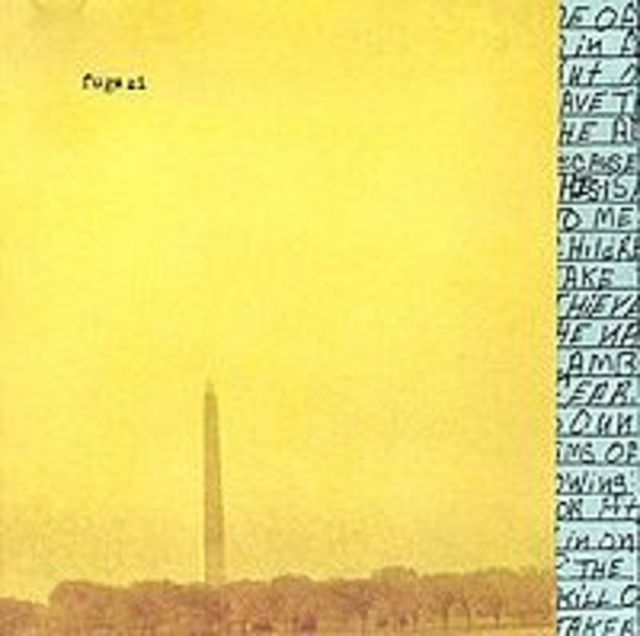
 Our occasional series “Secret History” features profiles of classic D.C. albums as a way of looking back at the District’s contributions to music over time. This installment tackles Fugazi’s epic third LP, In On The Kill Taker (Dischord, 1993).
By 1993, Fugazi was legendary. A D.C. institution boasting members of pioneering hardcore and emo outfits Minor Threat, Embrace, and Rites of Spring, the band (whose moniker is pulled from the Vietnam soldiers’ acronym for “Fucked Up, Got Ambushed, Zipped In”) had plenty to show for its first five years. 1989’s 13 Songs (a compilation of the 1988 eponymous debut EP and the following year’s Margin Walker EP), 1990’s Repeater, and 1991’s Steady Diet of Nothing were all instant classics, blazing collections of super-smart post-punk expertly conceived and delivered. Since joining forces, Ian MacKaye (guitars/vocals), Guy Picciotto (guitars/vocals), Joe Lally (bass), and Brendan Canty (drums) had largely come to define “the Dischord sound” (synonymous for many with “the D.C. sound”) as hard-hitting and fearsomely catchy, mixing sing-along melodies with overtly progressive political messages and unshakable integrity, giving fans something to think about after the amps had stopped buzzing. Easily the District’s best known and most respected indie rock export, Fugazi had nothing to prove.
And yet Fugazi’s third LP is far from the sound of a band resting on its laurels. In On The Kill Taker is the group’s most accomplished offering, building on their patented style — a live-wire twin guitar attack pairing MacKaye’s low-end growl and Picciotto’s trebly squall, ridiculously in-the-pocket rhythms from one of the best bass-and-drum duos this side of Sly and Robbie, and inventive sonic textures that always keep the listener guessing — all while exploring new musical directions, tempos, and themes. Not so much a departure as a major step forward, In On The Kill Taker is the sound of a band with plenty of tricks left up its sleeve.
“I think In On The Kill Taker kind of re-invigorated us a bit, mentally,” Picciotto told DCist. “I think a lot of bands reach a midpoint where they’ve done a few albums and can’t find a way forward from there, and they either break up, just sort of repeat themselves, or do a radical re-invention of themselves that is usually awkward and forced. Those are the ruts I think this album helped us avoid; from there I think we felt more confident about being able to figure out the studio and being better able to push things in other directions.”