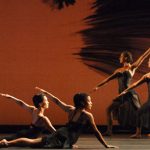
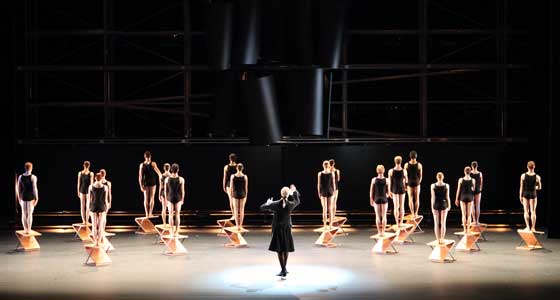
 Multiplicity, Compañía Nacional de Danza, directed by Nacho Duato
As part of an ongoing U.S. tour, the Compañía Nacional de Danza brought its production of Bach: Multiplicity. Forms of Silence and Emptiness to the Kennedy Center Eisenhower Theater last night. As previewed earlier this week, controversial choreographer Nacho Duato drew his inspiration for the work from the life and music of Johann Sebastian Bach. The source is represented in the performance by the soundtrack of music, replayed from carefully chosen recordings. As experienced at last night’s performance, it is one of the most visually and musically gorgeous modern dance pieces to come to the Kennedy Center in years. Duato has announced that he will retire from the CND this summer, so this tour is also the end of an era.
Simply put: If you can find a ticket for tonight’s performance, take it.
In an audience discussion after Friday’s performance, Duato said that he spent two years closely listening to Bach’s music, and it shows. The recorded selections are all beautiful choices — some more austere, others more viscerally joyous — and the choreography was clearly thought out in conjunction with it, illuminating the music but also not detracting from it. Some of the gestures are derived from musical ones: the playing of the keyboard or other instruments (including one in which Bach plays another dancer like a cello, to the sound of one of the cello suites), jiggles or shakes inspired by embellishments, closely timed repetitions corresponding to polyphonic imitation. Rarely has the rhythmic vivacity of Baroque music been so adroitly captured in visual terms as in the Aeolus movement, set to the opening movement of the cantata Der zufriedengestellte Aolous, with the full cast arranged like the players of a chamber orchestra, pulsating to Bach’s direction. Nor has a complex formal structure like the ten interwoven lines (three violins, three violas, three cellos, plus continuo) of the third Brandenburg concerto been elucidated so clearly as in the coordinated movements of the ten dancers of the Brandenburgo movement.