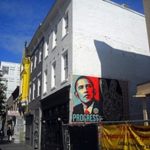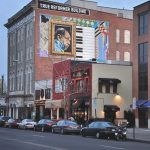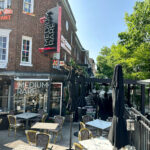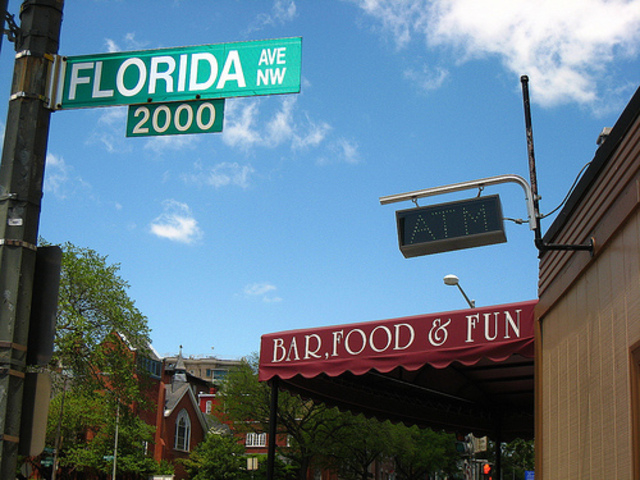
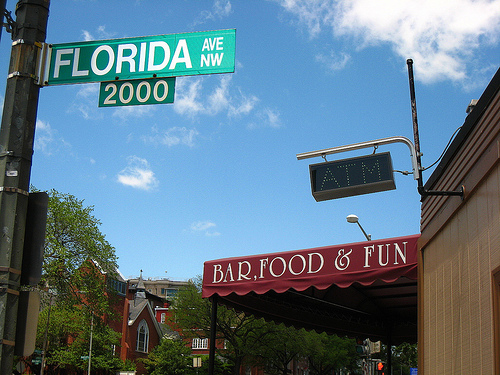
 Photo (of area just outside ARTS Overlay) by Maryland Route 5
Back in April, the D.C. Zoning Commission recommended increasing a cap on the number of bars and restaurants in the Uptown ARTS Overlay District from 25 percent to 50 percent. Since then, the ARTS Overlay’s been operating with a 50 percent cap on an emergency basis, but at issue was whether the Zoning Commission would permanently raise the bar on bars during its June meeting.
Supporters of business and bars along the 14th and U Street NW corridors and environs can celebrate: The cap on storefronts that may become bars has been permanently raised to 50 percent. As the City Paper’s urban know-it-all Lydia DePillis reports, the only person to testify against raising the cap to 50 percent was Wayne Dickson — who protested that the 50-percent cap was too low.
Unsurprisingly, the specter of Adams Morgan was raised during the meeting. Zoning Commission vice chair Konrad Schlater fretted about the increased traffic that restaurants and bars will bring. Sometimes city officials seem to believe that Adams Morgan sprang forth from the vacuum fully formed, bringing Jumbo slice and bro-fights to 18th Street NW in a flash of neon light.
But Schlater should consider that one reason Adams Morgan became Adams Morgan is the difficulty entrepreneurs found — for whatever reason — in opening bars and restaurants elsewhere, a situation that persisted for years during which Northwest/Shaw grew and gentrified. He should note, too, that Adams Morgan is essentially two sides of one short street, whereas the Uptown ARTS Overlay District comprises a larger area serviced by two Metro stations, a number of bus lines, and many more on-street and parking-lot parks.
UPDATE: The Zoning Commission will make its proposed action vote on the cap on June 28. At the June 10 meeting the Zoning Commission affirmed the text amendment proposed by the Office of Planning. Following the June 28 vote, there will be a one-month probationary period during which the Zoning Commission will still receive public comments on the new rule.