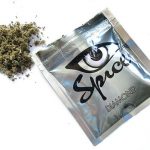
 Photo used under a Creative Commons license with Aesum
The Washington Post reports on the rise in sales of “spice,” a synthetic marijuana product that cannot be detected by drug-screening tests and can be bought and sold legally. At least, for the time being. How long after a Washington Post runs an eyebrow-raising feature — on a synthetic, legal substance that gets you high with none of the civic consequences of smoking pot — do authorities take notice? And will the head shops sell out their stock first?
Users may not get busted for smoking spice, but there could be other, more severe consequences — albeit not at first glance. The Post reports:
A lack of data and controlled testing make it difficult to determine the drug’s safety. And there are no official estimates of its growing use. But there has been a significant bump in calls to poison centers concerning spice. Nationwide, the American Association of Poison Control Centers logged 567 cases across 41 states in which people had suffered a bad reaction to spice during the first half of 2010. Just 13 cases were reported in 2009.
Five-hundred cases is, of course, an insignificant number given that 2 million poison exposure cases are recorded by the AAPCC each year. It’s unclear what that number really means, though. If the population smoking spice is as numerous as the nation’s pot smokers, then 500 bad reactions would tell you that spice is pretty reliable stuff. But the number is probably not that high. If it were 500 complaints among, say, the number of people who really like the Salahis, then you’d have reason to believe people were having multiple bad episodes per year.