 Padrevia logo.
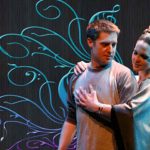
Among the sometimes wacky performances of the Capital Fringe Festival are some unexpected offerings of the more mainstream variety, with a twist. An adventurous little company called Opera Alterna, which presented two new operas by local composers at last year’s festival, returns with an earnest production of Thomas Pasatieri‘s 1967 melodrama Padrevia. The company is making the revival of Pasatieri’s concise, neo-Romantic operas a specialty, after presenting two of them at the 2008 Fringe Festival. Pasatieri, writing his own libretto, adapted a tragic story from Boccaccio’s Decameron, the first novella from Giornata IV, a day on which all the members of the brigata told stories of love that ended badly. Tancred, the Prince of Salerno, loves his only daughter, Gismonda, so much that he keeps her isolated from all other people in his palace. Reaching adulthood, she finds love by arranging to meet with Guiscardo, who tends the palace garden. Needless to say, Tancred catches the lovers in the act, leading to a violent conclusion, a verismo shocker that could pass at times as the fourth act of Puccini’s Il Trittico.
Opera Alterna’s simple production by director Jay D. Brock, with bare-bones sets (designed by Rick Lenegan) and costumes (Anna Lathrop), is basic but visually effective, as experienced at the opening performance on Sunday afternoon in Studio Theater’s small Mead Theater. Leading the cast was baritone Tad Czyzewski, whose performances with the company have been a highlight, and the snarl at the top of his baritone voice was particularly effective. Soprano Daniele Lorio brought a dramatic edge of pathos to the role of Gismonda, although an overactive vibrato gave a (perhaps appropriately) shrill hysteria to Pasatieri’s frequent pushing of the part into the high range. Tenor Siddhartha Misra had a pleasing sound with more raw potential than overall polish, while Chris Dwyer gave the spoken role of the narrator a disturbing, wild-eyed quality. Pianist Nicholas Catravas, playing a reduction of the orchestral score at the unfortunately out-of-tune piano, elucidated all of the varying styles, from overblown Puccini, to dissonant clashes, and back to lush Korngold chromaticism. Worth a listen for the chance to hear a rarely performed contemporary opera, but not for the faint of heart.
This production will be repeated on July 16 (8:30 p.m.), 17 (11 a.m.), 21 (6 p.m.), and 24 (6 p.m.).