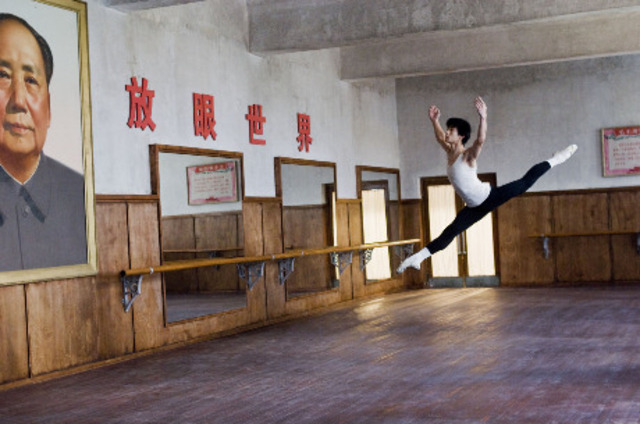
 Near the beginning of Star Wars, in the scene in which Luke and his uncle purchase C-3PO and R2-D2, they initially choose a different model rather than our plucky blue friend R2 from the lineup of droids. For just a moment — before the one they do choose blows a gasket and Luke points to R2 and says, “What about that one?” — the audience is filled with dread that after all they’ve been through, that the two droids might be separated again. Nearly the same thing happens at the start of Mao’s Last Dancer, as Communist Party officials come into a rural Chinese classroom looking for potential recruits for the new national ballet program started by Chairman Mao’s wife. They walk around the room, take stock of the children, and are nearly out the door when Li Cunxin’s teacher grabs the coat of the dour official, points to Li, and says, “What about that boy?”
In the sci-fi fantasy, the brief moment of artificially heightened emotion works. But in a historical drama based on real events, it has the unintended effect of making the moment feel like…well, pure fantasy. Maybe truth is stranger than fiction, and the scene really did go down that way. But on film, it just feels like a nakedly manipulative move designed to quickly make Li Cunxin into a sympathetic underdog.
It’s the problem that pervades Mao’s Last Dancer, Bruce Beresford’s adaptation of Li Cunxin’s autobiography. The story is filled with plenty of drama: Li really was plucked from a peasant background, rose through the ranks of the rigorous, physically punishing 16-hour days of the Beijing ballet training, and eventually came to the United States, where he would create an international incident when he attempted to avoid going back home after the term of his exchange program had ended. But Beresford somehow takes a true story and makes it feel manufactured and manipulative.