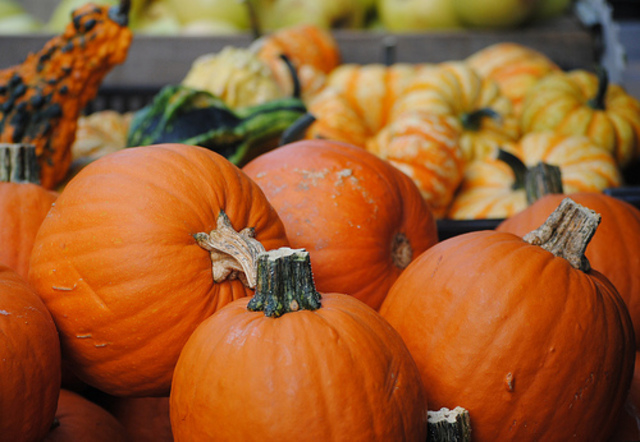
 Photo by ekelly80.
As we move past the autumnal equinox and our nights get longer, the landscape, even in the city, appears on its deathbed. Leaves falling and plants withering are all signs Halloween is coming. Preparations for parties, Misfits cover bands and costume ideas all must be made, while also making time for decorations and pumpkin carving. Doing my best Jack the Ripper impression on an unsuspecting gourd is one of the joys that doesn’t lose its edge (ahem) at any age. But for some reason, as we get older, we’re allowed to be a little more creative without being sent to the guidance counselor. Luckily for us, the innards of all those pumpkins don’t just get scattered like the bowels of the next zombie walk, but are quite useful and delicious in some of our favorite fermentables.
While we would love to think of the Colonies as having concocted pumpkin beers, this, for the most part, isn’t true. While they did use pumpkins (George Washington had his own Pumpkin Porter recipe), squash and other ingredients when barley wasn’t available in North America, their use of it was solely for fermentation sugars and not taste. And there has been no documentation of the spices we associate with pumpkin (cinnamon, nutmeg, cloves) having ever been regularly used for the style until the creation of the pumpkin beer market in the 1980s. Fast-forward 30 years, and the market that once had two or three sparse offerings is now a large part of American craft seasonal releases. With this increase into the market also came an increase in respect for the style. What was once though of as a bit of marketing trickery fixed on fall nostalgia is now a category in the Great American Beer Festival (GABF) and is produced by some of the country’s most-respected brewers.