DCist’s highly subjective and hardly comprehensive guide to the most interesting movies playing around town in the coming week.
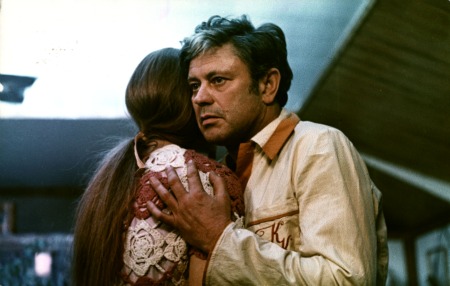
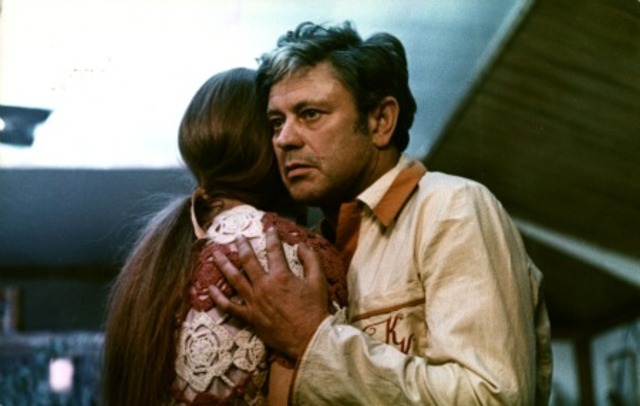
Like Stanley Kubrick, Russian director Andrei Tarkovsky had a huge impact on the cinema in a career that included a relatively small number of features. Also like Kubrick, one of his most celebrated works is a quiet and meditative science-fiction film that was disliked by the author of the source material. [Note: my memory wasn’t entirely accurate on this point; I’ve clarified in the comments section.] It’s natural, then, for people to immediately talk about Solaris as Tarkovsky’s 2001: A Space Odyssey, though they share little apart from a deliberate pace.
Tarkovsky disliked the emotional coldness of Kubrick’s work, and his commitment to putting onscreen the messy inner lives of the lonely, the frightened, and the grief-stricken is what sets Solaris apart. The story was adapted loosely from a novel by Polish writer Stanisław Lem, about a space station in orbit around the distant planet of the title, which is almost totally covered by a planetary ocean that is more than just water: it’s a huge sentient entity with the power to physically manifest people within the minds and memories of the crew — including long dead spouses.
Lem’s novel was more traditional science fiction, concerned with the inability of humans to communicate with aliens, but Tarkovsky (and, later, Steven Sodherberg in his own underappreciated take on the material) wasn’t interested in that so much as examining human emotional pain — the sci-fi box that it came in was just a means to a much more earthly end for the director. Lem didn’t care for Tarkovsky’s film because it wasn’t sci-fi enough, while Tarkovsky later felt the work was handcuffed by Lem’s sci-fi conventions. That narrative, sparse and meditative as it is, is still much more straightforward and traditional than much of the director’s work. That (relative) accessibility makes it the perfect entrance point into Tarkovsky’s often difficult, patience-requiring filmography, but if you let it seep into your psyche just as that ocean seeps into the astronauts’, it’s a mesmerizing and deeply rewarding film to watch.
View the original Russian trailer (not subtitled).
Sunday, 2 p.m. at the Freer, another excellent pick from artist Fiona Tan in the film series the Freer has allowed her to curate in conjuction with their exhibit, Fiona Tan Rise and Fall. Free.
—
This Australian film was acclaimed during its festival run in 2009, winning the Caméra d’Or award at Cannes for best first feature for its director, Warwick Thornton. Thornton has made his career as a cinematographer thus far; for his first feature as a writer/director, he tells the story of two aboriginal teens living in an isolated town deep in the desert landscape of central Australia. Samson’s a wayward kid, a habitual gas huffer infatuated with Delilah — when her grandmother dies and she is blamed, he “rescues” her by taking her on the road, where things aren’t much easier than they were back at home.
View the trailer.
Opens tomorrow at West End Cinema.