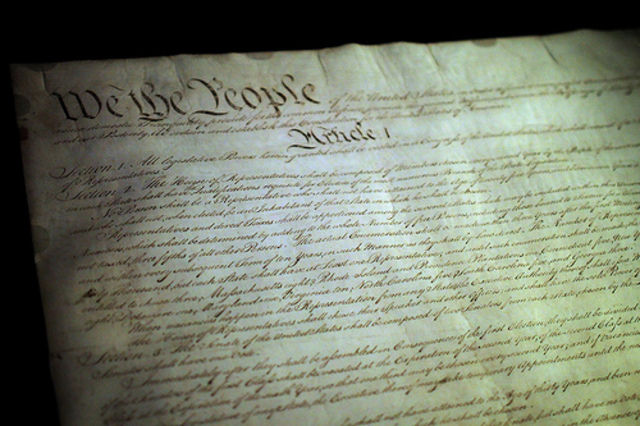
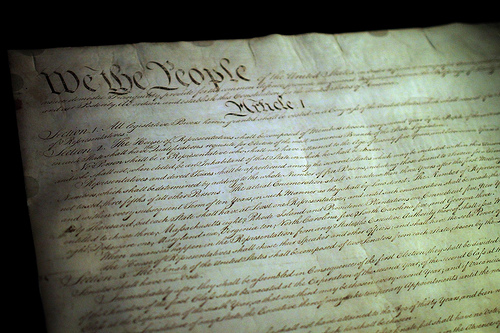
 Photo by Mr. T in DC.
December 15: it’s a bigger day in American history than you might think.
On December 15, 1791, a three-quarters majority was finally achieved and the Bill of Rights was ratified. Virginia’s own James Madison had proposed the first ten amendments to the Constitution to the First United States Congress on September 25, 1789 — an incredibly quick tweak for the framework, which had only been ratified on March 4 of that year after nearly two years of debate. It then took another two years for Madison’s Virginia to become the 11th state to ratify the Bill of Rights and cement the amendments as we know them into place. (Your late arrivals to the party: Massachusetts, Georgia and Connecticut, who technically didn’t ratify the amendments until Congress asked them to in 1939. I’m not saying these states hate freedom or anything, but you can draw your own conclusions.)
Of nearly equal importance: while the celebration of Repeal Day is normally marked on December 5 (the day that the 21st Amendment was adopted), it’s a little-known fact that the amendment wasn’t technically effective until December 15. The 21st Amendment is the only Constitutional amendment to have been ratified by special state conventions which were hand-picked for the purpose — normally, of course, Constitutional amendments are ratified by state legislatures. While the necessary proportion of state approvals to accept the 21st Amendment was indeed earned on December 5, technically the amendment that ended Prohibition did not become official until the December 15, 1933 — not that it stopped anyone from celebrating in the ten days between adoption and ratification.