Martin Austermuhle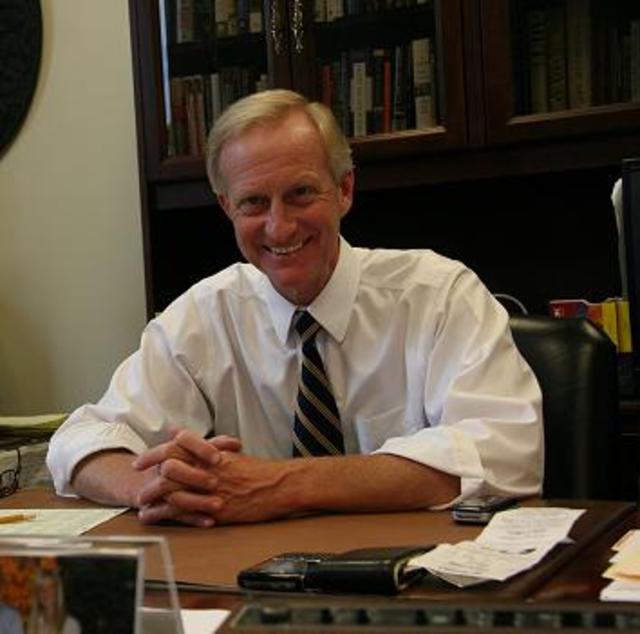
 Today, we’re presenting the second part of a three-part series on what’s to come for the District’s finances and the debate over how to close the huge budget deficit. Ward 6 Councilmember Tommy Wells presented his ideas yesterday; today, Ward 2 Councilmember Jack Evans gets his say. Tomorrow, we’ll try to make sense of it all. For a complete background on the events which have gotten the city to this point, please read the prologue which precedes the first installment of the series.
More Cuts, No New Taxes
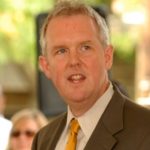
Jack Evans is the longest-serving member of the Council, and the location and decoration of his office serves of evidence of it. Evans occupies a corner space on the first floor of the Wilson Building, and virtually every inch of wall space in his office is covered with hundreds of photographs of him with other elected officials or minor celebrities. (The photographs apparently shift with the changing fortunes of the people in them. Michelle Rhee is now harder to find, but Vince Gray certainly isn’t.)
As soon as I pose a question about the city’s finances, Evans launches into a 20-minute-long soliloquy that quickly proves two things: he knows his stuff, and he’s adamantly against raising taxes.
“It’s never for me,” says Evans of Ward 6 Councilmember Tommy Wells’ proposals, which would impose small tax increases on District residents making more than $75,000 a year. “That’s the fallacy of raising the income tax. Frankly, it’s an easy way out; it’s popular. Of course we want to tax the millionaires and save the grandmothers program, but then it really gives the Council the opportunity to not make the tough decisions.”
Evans, who has served on the Council for the better part of two decades and chairs its finance committee, points out that since 2002, the size of the District’s government has grown 65 percent, the majority of which has come in the human services and education sectors. As revenues slowed in recent years, the increased spending begot a widening budget deficit that was covered by dipping into the city’s savings account. From a high of $1.6 billion in 2006, the account has shrunk 57 percent through 2010.
Though the Council has cut spending over the last three years, Evans pushes back at the notion that the cuts have been as severe as they need to be to bring back balance between revenues and expenditures. “We haven’t even cut to the bone,” he says, calling upon a phrase Mayor-elect Vince Gray used widely in recent months to explain the state of the city’s finances. “We’ve barely gotten through the skin. You can’t grow a government 65 percent — we’re talking about several billion dollars.”