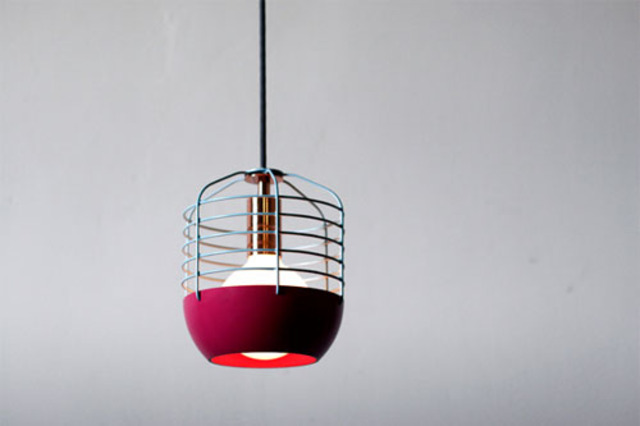
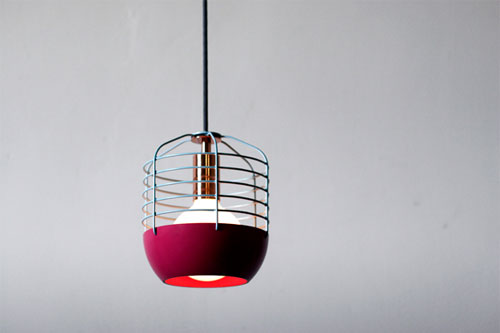
 Image of “Bluff City Lights,” courtesy of Civilian Art Projects and Apartment Zero.
In design, form has tended to follow function, even if only symbolically. With the advent of digital technologies, designers have moved toward a minimalist “black box” aesthetic (think iPhones, or external hard drives), where the plain exterior references internal complexities seemingly beyond our comprehension, rather than the functional principles of the object itself. Perhaps in response, a new American design aesthetic is emerging, one that is compared in significance to America’s mid-century design heyday, and which emphasizes function and symbolic functionalism while paying homage to handcrafting and America’s industrial past. D.C.-based designer Jonah Takagi works within this context, and we caught up with him to talk about living and working in D.C., as well as his first solo gallery show, New American Design, currently on display at Civilian Art Projects (in partnership with Apartment Zero).
What brought you to Washington, D.C. from the Rhode Island School of Design?
Jonah Takagi: After RISD, I lived in Portland, Oregon for a bit. Working at a “junk” store in trade for Hans Wegner pieces, riding my bike and building furniture for a small design/build studio. It seems like people re-locate for one of two reasons or both — girls/boys and jobs. I moved to D.C. in 2003 for a girl.