 Any discussion of Sylvain Chomet’s beautiful new animated feature, The Illusionist, can’t ignore the film’s unusual origin. Chomet adapated the film from an unproduced script by the late French actor/writer/director Jacques Tati, which reportedly was a sort of dramatized letter of apology to his eldest daughter, who he abandoned when she was still quite young. Chomet, though, claimed the script was actually written for a younger daughter, Sophie Tatischeff, who gave Chomet the screenplay, and whose name appears in the finished film’s dedications. There’s a great deal of controversy over Tati’s true intentions in writing this story, all of which makes for some fascinating reading.
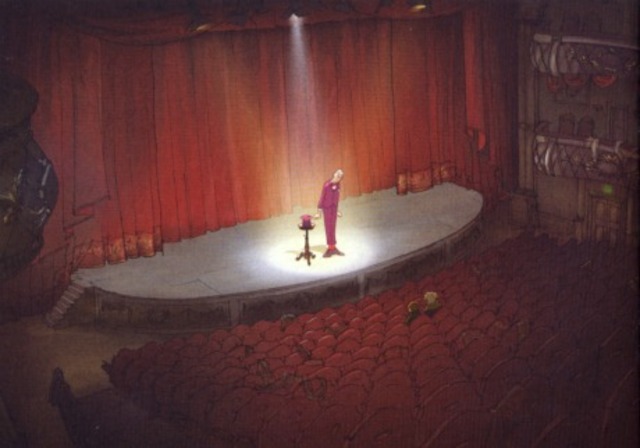
Now that it’s been mentioned, though, it can really be dismissed as largely irrelevant to the film that resulted. It’s obvious that Chomet has taken Tati’s basic framework and adapted it into something that serves his own purposes: to make a sad but whimsical tribute to Tati, rather than voicing the author’s long-overdue parental apology. Stylistically, this is very much Chomet’s work, in the same hand-drawn style as his last feature, The Triplets of Belleville, and told, like that film, without any real dialogue.
First among the major changes made was to make the title character into an homage to Monsieur Hulot, the largely mute, absurdly comic character created and played by Tati in many of his best-known films. Chomet doesn’t call the illusionist Hulot, but is actually even more direct in declaring who it’s meant to evoke (beyond the obvious cues of dress and mannerisms), giving the character Tati’s real name, Tatischeff.