 “I have no problem with that movie existing and going to film festivals and winning awards. But if you tell Americans to go see it, I guarantee they will never give foreign-language films another chance.”
That was the defeatist quote given by an anonymous American film critic to Salon’s Andrew O’Hehir following the awarding of cinema’s highest honor, the Palme d’Or, to Uncle Boonmee Who Can Recall His Past Lives at Cannes last year. Does the film have limited appeal to audiences raised on Hollywood storytelling conventions? Sure. But am I telling you to go see it, despite its dreamlike tone, deeply buried subtexts, and dogged resistance to easy explication and analysis? Unquestionably, yes.
Thai director Apichatpong Weerasethakul has become a phenom of the hardcore cinephile circuit, despite being roundly ignored both by the film industry in his homeland and even by most arthouse cinemas here in the U.S. That love has blossomed due to Apichatpong’s unconventional narratives, gorgeous sense of composition and thoroughly original voice. Uncle Boonmee has all of the things that have made the director so fascinating for film nerds, but what I think that unnamed critic ignores is that there’s an accessibility to its mysteries, at least to the viewer not averse to being challenged.
The film’s wordy title serves as a succinct plot summary. Boonmee is dying of kidney disease, and, close to death, he is brought closer to his past incarnations as well as the spirits of those who have been close to him. With these memories and spirits surrounding him, he begins his final walk towards death examining the karmic path that has led him here and what might await him after he’s passed. The epigraph that opens the film isn’t attributed to him, but accurately describes his state of mind: “Facing the jungle, the hills and vales, my past lives as an animal and other beings rise up before me.”
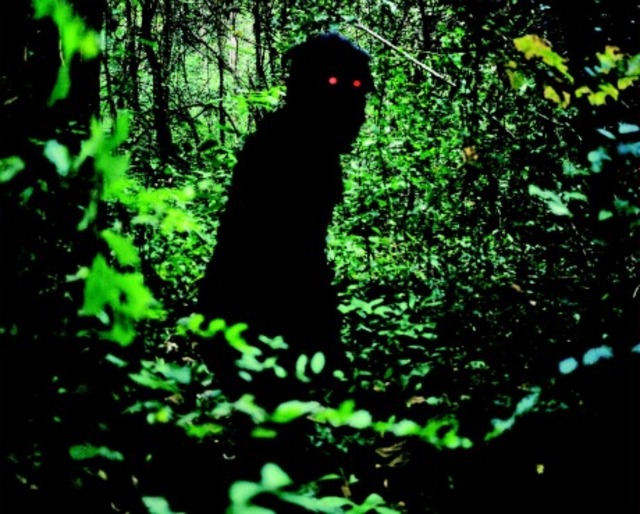
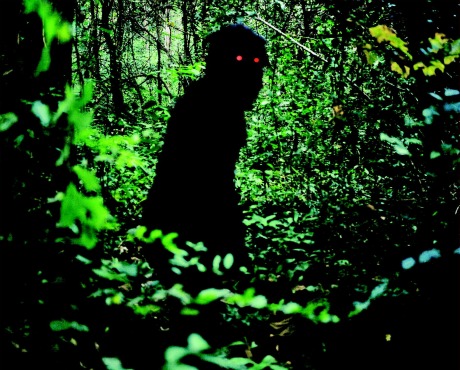
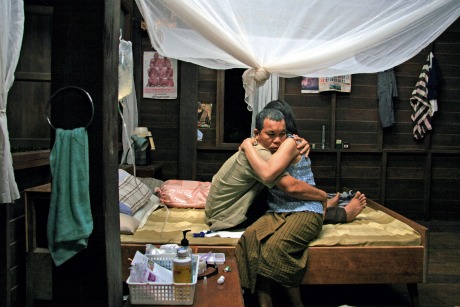 In the film’s present, his sister-in-law Jen comes from the city to visit him on his farm. As they sit at dinner, an apparition slowly fades in at an empty seat: Boonmee’s ex-wife, dead nearly 20 years. Then another, more corporeal otherworldly figure arrives, in the form of Boonmee’s long-lost son, now transformed into a “ghost-monkey”, a yeti-like creature with glowing red eyes, whose clan haunts the forests at night throughout the film. Upon seeing the newly hirsute family member, Jen only asks, matter-of-factly, “Why did you grow your hair so long?”
This sort of quiet acceptance of the extraordinary is the rule of this film, which features ghosts, strange creatures, out-of-body experiences and even a libidinous talking catfish, all of which are greeted with little more than mild surprise. Apichatpong imbues the proceedings with a narcotized tone — particularly through the trance-like speech of his actors — that is as seductive as it is sleepy. When the credits roll, the effect is of slowly awaking from a deep and dream-filled sleep, trying to piece together some sense of the images that have been going through your head.
Apichatpong likes to keep his camera as still as possible, setting up static frames with long takes playing out within their borders. The effect is lulling and hypnotic. That lack of movement serves to underline the jarring stylistic shift that occurs during the one sequence that is shot in a documentary hand-held style. The shift serves to rouse the audience to the importance of the sequence, in which Boonmee and his family enter a womb-like cave where he has come both to die, and to revisit the site of a birth in a previous life.
If the film’s ever-present symbology is tied, as I have to suspect, to Thai mythologies lost on Western audiences, it still doesn’t distance the film from anyone not brought up with those traditions. Apichatpong’s mastery at conveying impressionistically-rendered symbols doesn’t rely on context. Even when he makes pointed political references to Laotian-Thai relations, or on the Thai goverment’s brutal crackdown on communist sympathizers (that last point made in a beautifully rendered series of still photographs that Boonmee narrates as an abstract dream), the allegorical packaging makes it relevant whether the underlying story is apparent or not.
The quote that opened this review is, to my mind, like saying you shouldn’t send a person to a modern art museum because it will turn them off to all painters. Not only is it condescending, but it doesn’t allow for the possibility that there are a lot of people who might want more out of film than they usually get.
Most filmmakers — and by extension, most film audiences — only tap into a fraction of what the medium is capable of. Abstraction isn’t just the realm of capital-A Art, and subtext capable of extensive debate and interpretation isn’t limited to literature. Uncle Boonmee is a film that combines those qualities with a narrative that, once you get past the flashbacks and dreams, is remarkably straightforward. It’s a film that will linger in your thoughts and dreams for a long time after waking from its intoxicating slumber.
—
Uncle Boonmee Who Can Recall His Past Lives
Written and Directed by Apichatpong Weerasethakul
Starring Thanapat Saisaymar, Jenjira Pongpas
Running time: 114 minutes
Not rated
Opens today at the AFI