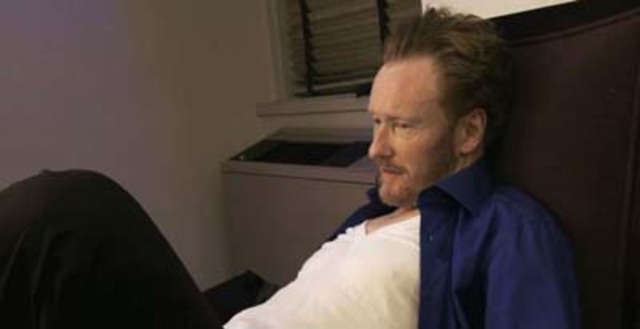
DCist’s highly subjective and hardly comprehensive guide to the most interesting movies playing around town in the coming week.
What it is: A candid look at the embittered late-night host’s “Legally Prohibited From Being Funny on Television Tour.”
Why you want to see it: A lot of ink has been spilled over Conan’s battle with Big Peacock. As part of his settlement with NBC, he was not allowed to appear on television, radio or internet outlets for six months after his final Tonight Show. Can’t Stop follows O’Brien as he takes Team Coco on the road, where he exercises his performing chops and not a few of his angry demons. Don’t blame Conan: although his settlement package landed him upwards of $40 million, the profits of his lucrative road show went entirely to his staff.
What to expect: A fire-breathing Irishman hell-bent on making America laugh uncomfortably.
What not to expect: The masturbating bear, which remains the intellectual property of the National Broadcasting Company.
View the trailer.
Opens tomorrow at E Street.
—
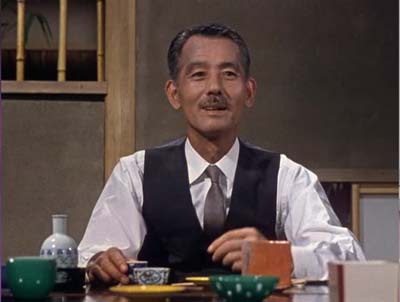 Chishu Ryu in Ozu’s An Autumn Afternoon.
Look Again: Japanese Cinema Classics
What it is: The Freer/Sackler’s summer series presents two very different but essential films.
Why you want to see it: An Autumn Afternoon is the final film from one of the great directors, Yasujiru Ozu. His body of work and stable of actors presents a quietly powerful portrait of domestic life in Japan, and about the difficult transitions from the traditional to the modern world, from parenthood to old age. His final testament is one of a handful of color films he made, but though these have a different feel from his black and white masterpieces, the formal precision and quiet observation (from a tatami-level camera) are pure Ozu. As with his Good Morning (Ozu with fart jokes!), television enters the world of his late films as a cautionary eye renting the family asunder. Chisu Ryu, who appeared in Ozu’s films over a span of thirty years), stars as a widower living with a niece ready to get married. The problems of the elderly is a common theme in Ozu, and in his last bittersweet film, it is like the older generation is finally left behind. Masaki Kobayashi’s Kwaidan is a different kind of masterpiece. The title means “ghost story,” and this anthology offers four tales of the supernatural. A must-see for fans of Kaneto Shindo’s Onibabah, which played at the Landmark earlier this year, this vividly colorful film paints an even more dreamlike vision of the transition between the worlds of life and death.
What to expect: Tenderness and horror, depending when you go.
What not to expect : A dry eye Friday night; pleasant dreams Sunday.
View the trailer for An Autumn Afternoon.
View the trailer for Kwaidan.
An Autumn Afternoon screens Friday, June 24 at 7 p.m. Kwaidan screens Sunday, June 26 at 2 p.m. At the Freer Sackler. Free.
—
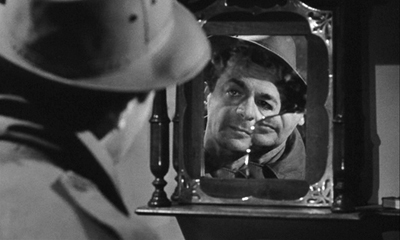 Serge Reggiani in Le Doulos
Two by Jean-Pierre Melville
What it is: New 35mm prints of films from one of the great French directors.
Why you want to see it: Jean-Pierre Melville’s best-known film is probably the Alain Delon vehicle Le Samourai, a poster of which can be seen in the quirky coming-of-age pic Submarine. Next week, the AFI gives us two of Melville’s powerful character studies — stylish films as thrilling as the best film noir. In Le Doulos (The informer), a dashing man in a trench coat and hat stops at a lamppost. But this is no Singin’ in the Rain. Serge Reggiani is a well-loved French singer, but like Yves Montand him, he never shied from a seedy role for his image. Reggiani is the titular finger man, brooding, exisentially alone and not to be trusted. Black and white photography paints a suitably murky moral picture in this tale of deceit. Le Doulos also stars Jean-Paul Belmondo, who plays against type in Leon Morin, Priest. The Breathless star sheds his iconic French gangster persona for contemplative collar — who happens to be desired by all the village women.
What to expect:: In Belmondo, the kind of smouldering sex symbol that only a cauliflower-faced Frenchman can pull off.
What not to expect: Moral certitude.
View the trailer for Le Doulos.
View the trailer for Leon Morin, Priest.
Tuesday, June 28 through Thursday, June 30 at AFI Silver. Separate admission for each film — check website for showtimes.
—
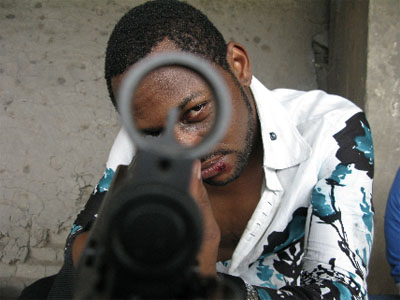
What it is: The Congolese answer to Pulp Fiction?
Why you want to see it: Director Djo Tunda wa Munga’s film Viva Riva! has been compared to American sources like Treasure of the Sierra Madre and Tarantino. But behind this lurid story of hijacked gasoline, Angolan crime lords and lesbian Commandants is a stark social and political commentary about living where shantytowns and gated communities uneasily co-exist.
What to expect: Thrills that Hollywood can’t offer.
What not to expect: Low blood pressure.
View the trailer.
Opens tomorrow at E Street.
—
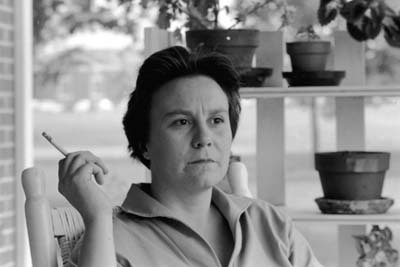 Author Harper Lee. HEY BOO, a film by Mary Murphy. A First Run Features release. Photo: Donald Uhrbrock.
What it is: The life and work of Harper Lee, whose novel To Kill A Mockingbird was awarded the Pulitzer Prize fifty years ago last month.
Why you want to see it: One of the most beloved classics of American literature, To Kill A Mockingbird inspired an Oscar winning movie, and still sells over a million copies every year. But its author, who turned 85 in April, never published another novel, and has not granted an interview since 1964. CBS news producer Mary Murphy is the author of Scout, Atticus & Boo: A Celebration of To Kill a Mockingbird, and her film assembles research, reportage and interviews with Lee’s friends and family, including her 99-year-old sister Alice.
What to expect: Intimate recollections, anecdotes and biographical details, including new information about Lee’s tumultuous friendship with Truman Capote.
What not to expect: A sequel.
View the trailer.
Opens tomorrow at the West End Cinema.
—
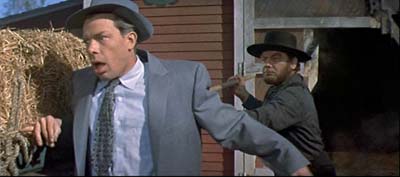 Lee Marvin and Ernest Borgnine in Violent Saturday.
Color, ‘Scope: Recent Restorations from the 1950s
What it is: A weekend of wide-screen classics at the National Gallery.
Why you want to see it: The gallery’s East Wing auditorium is one of the city’s great repertory treasures, with a big screen, free admission and stadium seating before it was cool — which means you never have to worry about somebody’s big head in front of you. This weekend concludes the NGA’s festival of recently restored Cinemascope classics from the 1950s. Why should you care? The advent of television was seen as a threat to movie houses whose owners worried about losing viewers to the small screen. Studios answered with 3-D (sound familiar?) and later, CinemaScope, which refers to a series of lenses used to photograph and project widescreen movies. The gallery celebrates the era when the aspect ratio opened up, painting spacious vistas populated by characters separated by greater distances (think of the crop dusting scene in North By Northwest — but wider). A young Lee Marvin is one of the bank robbers in Richard Fleischer’s Violent Saturday, but marquee status should be given to the majestic train scene — a staple from the earliest days of filmmaking, but one that is best served by this widescreen format. In Nicholas Ray’s Bigger than Life, the suburban family dream of the 1950s is rent asunder by drug addiction. The drug of choice? Cortisone. Watch mild-mannered teacher James Mason spiral downward in what critic Chris Auty describes as “family life torn apart by Oedipal bloodlust.” Is there a better way to spend your Sunday?
What to expect: Cinematography like mama used to make.
What not to expect: Your 52-inch plasma screen to ever seem adequate again.
View the trailer for Bigger than Life.
Violent Saturday screens at 2:30 p.m. Saturday, June 25, Bigger than Life screens at 2 p.m. and 4:30 p.m. on Sunday, June 26, at the National Gallery. Free.
—
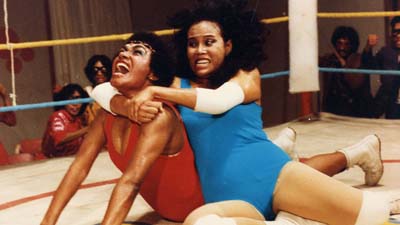 Ferocious Female Freedom Fighters
What it is: An Indonesian women’s wrestling movie dubbed into English by the team that brought you The Toxic Avenger.
Why you want to see it: Legend has it that when the producers of the original film saw what Troma Entertainment had done to it, they warned writer/director Charles Kaufman that if the actors ever saw the film, they’d kill him. This will be the Washington Psychotronic Film Society‘s last night at The Passenger. Come out to support The Incorrigible Doctor Schlock, and watch this space for updates.
View the trailer.
Tuesday, June 28 at 8 p.m. at The Passenger. Suggested donation $2.
—
2011 Student Academy Award® Gold Medal-Winning Films
What it is: the Academy of Motion Picture Arts and Sciences, in partnership with The Charles Guggenheim Center for the Documentary Film and the Foundation for the National Archives, presents the Gold Medal-winning films of the 2011 Student Academy Awards. Established in 1972, the Student Academy Awards support and encourage excellence in filmmaking at the collegiate level. Previous Student Academy Award winners have gone on to earn more than forty Oscar noms and have won or shared eight golden statuettes.
Why you want to see it: These short films promise to show us the voices of tomorrow’s filmmakers, today. Titles include fiction and documentary short subjects by students from New York to California to Norway.
What to expect: The best in student film work.
What not to expect: To have heard the last from these young tyghes.
Thursday, June 30, at 7 p.m. at the McGowan Theater, National Archives. Free.
—
What it is: A program of short films which explore issues that affect individuals and families with genetic conditions, hosted by Genetic Alliance in conjunction with the 25 years of Innovation conference.
Why you want to see it: Films look at the struggles and triumphs of children affected by Marfan Syndrome, Apert Syndrome, Parkinson’s and sickle cell disease, as well as a study of epigenetics as it relates to identical twins and the concepts of “nature and nurture.”
What to expect: Inspiration for those dealing with health and genetic issues.
What not to expect: To give up hope.
Tonight, Thursday, June 23, 2011 at 7:30 p.m. Bethesda North Marriott Hotel and Conference Center (Metro: White Flint).