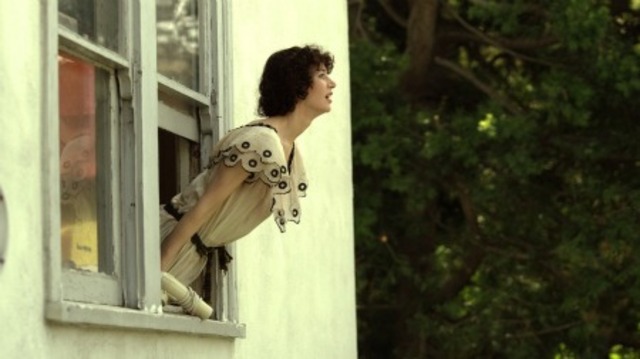
 Paw Paw is waiting for real life to begin. The cat whose interior monologue serves as the occasional narration for Miranda July’s bittersweet tale of modern melancholia is a stray, picked up by Sophie and Jason (July and Hamish Linklater) and brought to a shelter after they find him with an injured paw. This mid-thirty-something couple has also been waiting for life to begin. But the fact that they’ve been treading water, he in a work-at-home job providing basic computer tech support, she teaching dance to kids, doesn’t dawn on them until the prospect of adopting the cat they’ve rescued makes them realize that committing to caring for him might take them right up to their forties. At which point, from their perspectives, their lives will practically be over; their ambitions, long postponed as they sit on the couch surfing the internet on their laptops, now unattainable as middle age and death rapidly approach.
They do get a stay of execution, though. The vet tells them that it’ll be 30 days before Paw Paw is well enough to go home with them, and they decide to treat those thirty days as if they’re the last of their lives. They quit their jobs. Jason resolves to start paying attention to everything around him, to listen to people he might not normally listen to, and in the process gets roped into volunteering to sell trees door-to-door by a clipboard-wielding environmentalist. Sophie decides to create 30 dances in 30 days to post on YouTube. Unsurprisingly, they find no more fulfillment in their newfound freedom than they do in their comfortable rut, and they begin to drift apart. He begins visiting an eccentric elderly man with odd hobbies and stories; she begins an affair with a slightly sleazy suburban single father.
This isn’t a standard-issue quirky indie relationship film, though. July’s deadpan demeanor — with a sad, expressive gaze that suggests a clear blue-eyed Buster Keaton — belies a restlessly ambitious creative force. Whether in her evocative short stories, idiosyncratic performance pieces, or interactive art projects, she’s an artist consistently stretching against the constraints of whatever medium she finds herself in; much as her character strains against the confines of a sentient T-shirt that she stretches to cover her entire body in the only fully realized dance/movement piece that Sophie manages in the film.
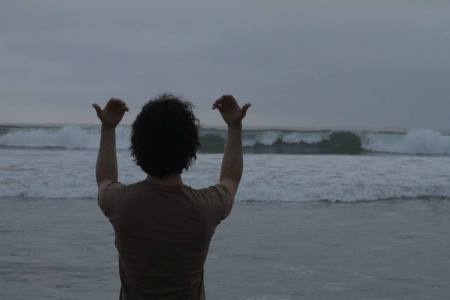 The Future shifts from a simple story about dissatisfied urban bohemians into a heady allegory filled with gorgeously realized and unexplained moments of magical realism. These moments arise as if this is the most natural place the film could go. They make complete sense because July expertly creates characters that exist just on the verge of, but never entirely within, a recognizable real world. There is an element of trance in the dreamy way these people conduct themselves through their lives, the strange and subtly affected way that they speak. The interludes with Paw Paw — who is mostly represented just by puppet paws, with July providing his fractured, deliberate vocals — pull the film towards fantastical territory from the start, as he speaks in the cadence and language suggestive of fairy tales.
So when the possibility of parallel universes existing blocks away from each other in Los Angeles is raised, or time literally stops, or the glowing full moon begins to speak in the voice of a kindly old man, or years pass in the space of moments in front of Sophie’s eyes, none of it seems out of place. July’s dry humor, often mocking the technological dependency and impersonal nature of the modern age, keeps these developments film from becoming too self-consciously quirky or precious — a common complaint about her work from some quarters.
July suggests that we humans are wild, or perhaps want to be, yet are not allowed this freedom — just as Jason and Sophie worry Paw Paw might be wild when they eventually bring him home. The cat provides symbolic resonance for many of the anxieties of the couple. He has lived his life on the uncertain outside, which he describes as the darkness, alone with no hands to pet him. He fondly looks forward to going home with them, and experiencing the love that he gets for a fleeting moment when they rescue him. Sophie and Jason are living in their own darkness, their own loneliness. They want to feel love, but circumstance and their own insecurities and self-involvement just keep getting in the way. July ties together these three characters’ search for love, their desperate craving for contact, in a devastating narrative that employs time, space, and perception as simple props, as malleable as any constructed set in the way she uses them to serve the symbolic needs of the story.
—
The Future
Written and directed by Miranda July
Starring Miranda July, Hamish Linklater, David Warshofsky
Running time: 91 minutes
Rated R for some sexual content.
Opens today at and Shirlington.