Martin Austermuhle
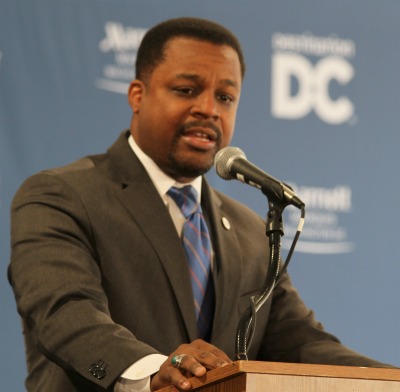 Photo used under a Creative Commons license with dbking.
The municipal soap opera involving a possible tax increase on the District’s highest-earners took on new life this week with a report from the Post that D.C. Council Chair Kwame Brown, who has staunchly opposed any tax hikes, may be softening his stance — but only if any additional funds only go for the upkeep of the District’s new schools, libraries, parks and recreation centers.
Since Mayor Vince Gray included a tax increase on District residents making more than $200,000 a year in his budget proposal in April, the city has been stuck in a dramatic back-and-forth over how to balance the budget. Brown scrapped Gray’s proposed tax hike, replacing it with a new tax on the purchase of out-of-state municipal bonds. But a move by Councilmember Tommy Wells (D-Ward 6) kept the bond tax — which Brown had also planned on buying back with funds from future revenue projections — on the table, and a later move to delay the implementation date was vetoed by Gray.
But with an almost-majority of the council eyeing an increase (this time on those making more than $350,000 a year), Brown seems to be giving way, though with explicit caveats.
“If the conversation is going to be about increases [in taxes], it has to be in the context of the upkeep of the District’s facilities,” Brown said this morning. He noted that while the city has taken on new schools, libraries, parks, and recreation centers in recent years, the funds for maintenance and upkeep simply aren’t there. (The Post’s Mike DeBonis sharply pointed out how this is a problem last week.) The only interest he would have in a tax increase, Brown said, was if any additional funds — estimated to come in at above $10 million a year — were dedicated to that end.
In essence, things have come full circle. Gray’s tax increase seems to have made its way back to the table, though on a small group of residents and for a more specific purpose.
Brown also said that he would still work to delay the implementation of the new out-of-state municipal bond tax so that it didn’t retroactively affect residents that bought bonds this year. Calling the retroactive tax “unfair,” he said that “we must find a way to fix it.” He also pledged to remain focused on the larger issues of the District’s financial well-being and “right-sizing the government.”
All told, this should make for an interesting September for the Council. Any additional debates and changes to the fiscal year 2012 budget have to be made before it formally takes effect in October, meaning that councilmembers will likely have a tight schedule to operate on.