Martin Austermuhle
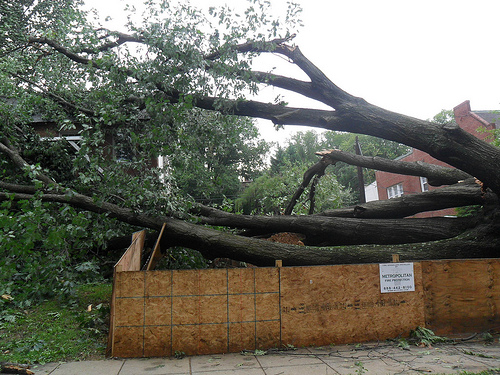 Photo by msdeena.
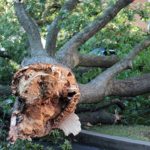
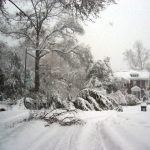
The District’s tree canopy has always been something of a point of pride for the city, but as this weekend’s tropical storm proved, trees can and do come down in extreme weather. (According to the D.C. Department of Transportation, the city responded to 216 incidents of downed trees and branches over the weekend.) And with hurricane season just beginning and another winter on its way, downed trees and branches won’t soon be a forgotten memory.
If the tree is on public property, it’s a no-brainer — caring for and cleaning up after a fallen tree is the District’s responsibility. Things are different, though, when it comes to trees located on private property, especially when they come crashing down. Private trees, it seem, don’t seem to care who’s property line they cross on their way down to the ground.
Shawn Walker, an Urban Forestry Instructor at Casey Trees and former arborist with the city’s Urban Forestry Administration, told us that, in most cases, a fallen tree and any damage it causes would be covered by homeowners insurance as an “Act of God.” Things can get more complicated, though, if the property owner responsible for the tree is found to be particularly negligent, or if the tree, as many do, has roots or branches that cross property lines. In that case, you should really hope you’re friendly with that neighbor — if not, you could well end up re-visiting some of the various court cases that have touched upon tree-related conflicts over the years.
Regardless, chopping away yourself isn’t often recommended as a first resort — get a certified arborist to assess the tree first. (Also, don’t ever think of cutting down a tree yourself. If it has a circumference larger than 55 inches, you need a permit from the city to chop it down.) Additionally, Pepco might handle the problem for you. If a private tree threatens power lines, they’ll trim away.
Considering the tree-related havoc caused by Irene, the D.C. Department of Public Works announced yesterday that this week they’ll be collecting branches from private trees that may have come down during the storm. The branches have to be cut down to no more than 4-foot-long segments and tied together in bundles of no more than 2 feet in diameter. The bundles will be collected from public tree boxes on sidewalks.