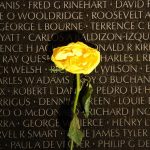
 Decades ago, United States armed forces were shipped off to southeast Asia to fight in a jungle war against an enemy that used guerrilla tactics, in a conflict that was meant to finally liberate a population recently divested of a European occupying force, but as yet unused to democracy. Opinion back home was mixed, and prominent figures in the media called the whole affair a “quagmire”.
No, not that conflict. Keep going a few more decades back.
Given the surface similarities between the Vietnam War and the turn of the century Philippine-American War, it’s perhaps surprising that more filmmakers in the ’70s didn’t turn to the earlier conflict for allegorical fodder in cinematic examinations of Vietnam. But this conflict has stayed almost entirely off of American movie screens in all eras. Now, over a century after its end, Amigo writer-director John Sayles finds plenty of parallels to exploit between our occupation of the Philippines and our presence in Iraq post-9/11.
That’s not to suggest that Amigo is as strident an anti-war polemic as one might think; Sayles has long been a political filmmaker, but his ideological points exist in service to story, and not the other way around. This film may be about two warring factions, but the real focus is one village caught in the crossfire. Sayles has criticism and praise to offer for both the occupiers and the revolutionaries, articulated by one distraught civilian who asks the question, “how can both sides be right?”
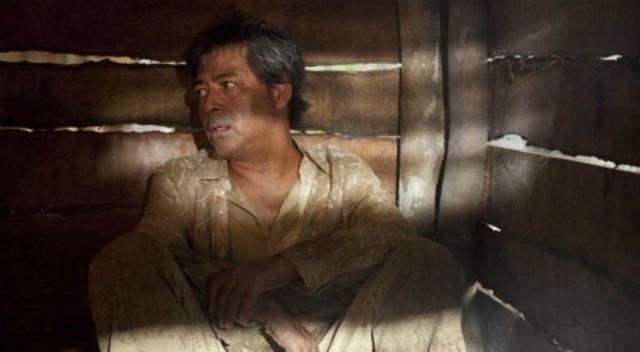
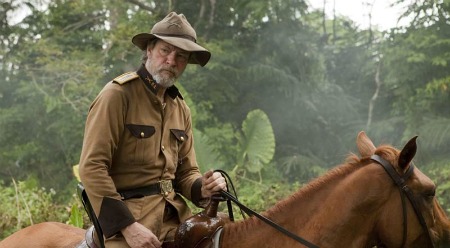 She might have better phrased that query as, “how can both sides be so wrong?” Because as abusive, casually racist and insensitive as the U.S. soldiers can be, their counterparts living in caves in the jungle are vindictive, rash and sloppy. Most of the suffering falls on the heads of the residents of San Isidro, a farming community led poltically by its head man, Rafael (Joel Torre), and spiritually by an opportunistic priest leftover from the Spanish occupation. When the U.S. soldiers, led by Lt. Compton (Garret Dillahunt), arrive to make a garrison at the village, a base to engage the rebels, Rafael is put in the uncomfortable position of being forced to accomodate the occupiers, even as members of his own family are on the other side of the line fighting. For the good of the village, he must cooperate without appearing to sympathize.
Much of the film’s commentary grows out of the culture clash between the U.S. soldiers and the villagers. Rafael owns the land in a kind of collective farming arrangement in which the rest of the villagers work the rice paddies for a share of the profits. The Americans they may not know to call it Communism, but they sure do know that it’s un-American. So they put Rafael to work alongside the rest of the village. Nevermind the fact that most of these men are the children of slaveowners who afforded their workers even fewer benefits than Rafael does his: They wave that off by claiming their families always worked the fields alongside their slaves.
Sayles works sharply pointed criticisms like these into nearly every scene. Compton’s dismissive response to the suggestion that they let the women vote for a new leader when they try to introduce democracy to the village (“Don’t be ridiculous!”) underlines American hypocrisies. The water torture that Rafael endures at the command of Col. Hardacre (a vicious turn from Sayles regular Chris Cooper) in order to get him to divulge the location of the rebels is an unmistakeable reference to waterboarding — particularly since the Americans don’t get the truth, just the answers Rafael knows will get them to stop. At one point the U.S. forces even refuse to recognize rebel forces as enemy combatants, insisting on referring to them as “bandits.” Just like the word “terrorist,” that designation allows them to deal with them outside normal rules of engagement.
If that sounds heavy-handed, it does border on it at times. But more often the film’s greatest weaknesses don’t lie in its blunt force, but rather in a slightly meandering pace, flat visuals, and a dryness of tone that dulls the emotional impact of Rafael’s story.
Even with some of that power taken away, though, Sayles is able to keep things from getting too preachy. That’s largely because he isn’t interested in making anyone into a punching bag. The Americans may represent misplaced and oft-denied imperialistic impulses, but as individuals, these men are rendered as recognizably human. The same goes for their sometimes over-zealous counterparts on the other side. The villagers may be caught in the middle, but Sayles blurs the lines between all of these factions to the point where sides don’t matter so much anymore. What’s absolutely clear is that the casualties of war may not always just or justified.
—
Amigo
Written and Directed by John Sayles
Starring Joel Torre, Garret Dillahunt, DJ Qualls, Chris Cooper
Running time: 124 minutes
Rated R for some violence and language.
Opens today at West End Cinema.
Director John Sayles is in town for Q&As at tonight’s screenings.