Martin Austermuhle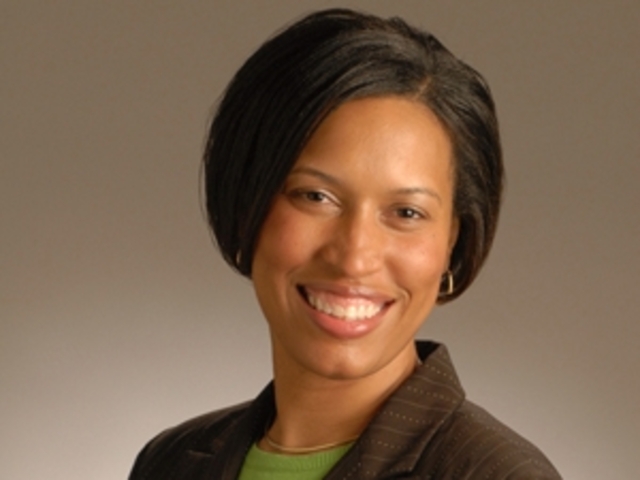
 Councilmember Muriel Bowser (D-Ward 4)
On “The Kojo Nnamdi Show” this afternoon, Councilmember Muriel Bowser (D-Ward 4) defended the D.C. Council’s decision to meet privately yesterday, while at the same time laying out her vision for ethics reform and criticizing a colleague facing legal troubles.
Speaking about the controversial decision to close a council meeting to the media, Bowser, who wasn’t actually at the meeting, said she would have sided with keeping reporters out.
“Sometimes public bodies have to conduct private business,” she said. “I think this was one such meeting.”
D.C. Council Chair Kwame Brown said that personnel matters and issues protected by attorney-client privilege were discussed; reporters present at the meeting argued that the agenda listed topics that should have allowed them to remain in the room.
Speaking on the flood of proposals to address ethics in city government — nine pieces of legislation have been introduced so far — Bowser, who chairs the committee that will consider the various proposals, again said that better enforcement of existing laws is better than simply more laws.
“We don’t need a transformation of the laws…we need enforcement,” she argued. Bowser added that she has been meeting with various agencies to find out what holes exist in ethics enforcement and how best to fill them. She’s scheduled two hearings — on October 12 and 26 — to discuss possible fixes.
When conversation moved to her troubled colleague, Councilmember Harry Thomas, Jr. (D-Ward 5), Bowser said that the agreement reached between Thomas and D.C. Attorney General Irv Nathan to pay back $300,000 in city money the Councilmember allegedly used for personal purposes “kind of bites into the benefit of the doubt that people would expect to give.”
“The agreement that Councilmember Thomas entered into put all of us on the Council in a difficult position,” she added, though she chose not to say whether or not he should resign.
Finally, regarding Robert Mallett, Mayor Vince Gray’s nominee to head the D.C. Board of Elections and Ethics, Bowser seemed disinclined to give him a pass on failing a residency requirement written into D.C. law.
“Why should we [give him a waiver]?”, she asked, noting that it was a vital position in enforcing ethics rules.