Martin Austermuhle
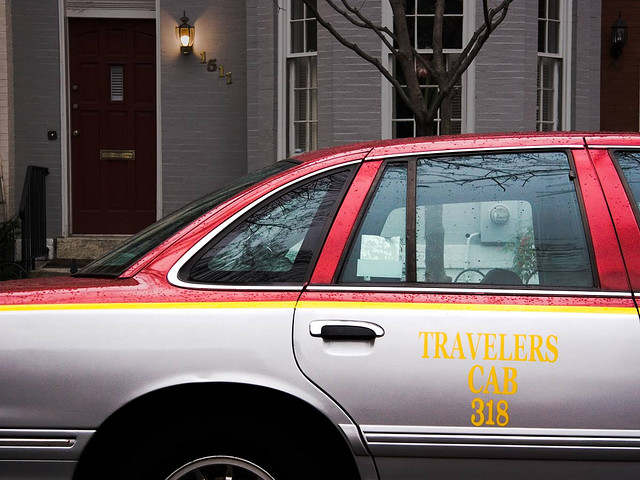 Photo by manwithface.
Ron Linton doesn’t have an enviable job. Tasked by Mayor Vince Gray to head up the D.C. Taxicab Commission, Linton spent part of the day testifying before a D.C. Council committee on the thankless uphill slog he’s decided to undertake in hopes of reforming an industry that everyone seems to have a complaint about.
During the hearing, councilmembers peppered Linton with questions on taxicab licensing, enforcement of regulations, fare-setting and even whether or not he thought that D.C.-based cabs should be painted just one color. Linton admitted that he was charged with leading a commission that wasn’t particularly tech-savvy — “basically, we are probably 50 years behind in how we handle information,” he said — and limited in its ability to even consider whether or not to raise fares or not.
On that point, Linton argued that the commission didn’t have the know-how or the staff to properly consider any future rate increases, and he pleaded with drivers to approach him with a proposal that could then be judged by the commission through public hearings. (In February, Gray ordered that the $19 fare cap be lifted; a recent lawsuit is asking that the city’s fare structure be updated.) Linton did say he thought it was odd that a commission with industry representatives on it would weigh in on fare increases, while also saying that he thought that a mayoral order granting him absolute authority in setting fares should be rescinded.
Linton even offered that he didn’t know exactly how many drivers or cabs existed in the District — there could be between 8,600 and 10,000 drivers, he said — much less how many drivers were D.C. residents. Councilmember Mary Cheh (D-Ward 3) noted that there are 7,300 licensed cabs on the streets, and argued that the District has more cabs per capita than much larger cities; New York has 13,000 cabs for nine million residents, Cheh pointed out.
Coucilmember Tommy Wells (D-Ward 6) questioned Linton on how the District’s taxicab industry could be modernized, including allowing the use of credit cards, better use of GPS and yes, a single color for all cabs. (“We’ve run out of tones and colors,” said Wells; Linton proposed a design task force.) Wells also argued that the commission shouldn’t even exist, and that regulation of taxicabs should be brought under the D.C. Department of Transportation. Linton disagreed, but said that he need a full commission to better regulate the industry. Last week, Gray hinted that he might give Linton what he wants — he said he would appoint four new members to the commission, including two drivers. As for modernizing cabs, Linton said that a surcharge would help put money into a fund to better improve cabs.
Ultimately, the biggest sticking point in improving taxicabs is a lack of resources, said the owner of one taxicab company. He said that while many of the fixes to the industry could be relatively simple, the few full-time employees at the commission — he said there were only four — could only do so much at a time.
Larry Frankel, chairman of the Dominion of Cab Drivers and one of the people involved in the lawsuit against Gray and Linton, didn’t seem particularly optimistic about the future, claiming that Gray had “retained [the] dictatorial role” used by Mayor Adrian Fenty when it came to regulating the industry. Frankel argued that cab drivers had to be included in any discussion of changes to the industry, and not talked over.