DCist’s highly subjective and hardly comprehensive guide to the most interesting movies playing around town in the coming week.
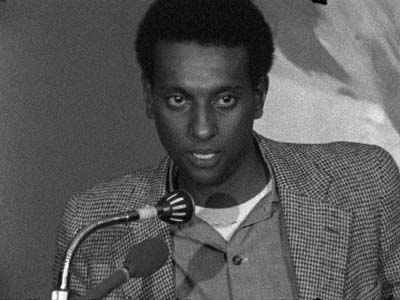 Stokely Carmichael, 1967.
The Black Power Mix Tape 1967-1975
What it is: A controversial movement as seen through the eyes of Swedish journalists.
Why you want to see it: Well-meaning mainstream films like The Help pose a dilemma: must tales of the oppressed always be told by the oppressors? The genesis of The Black Power Mixtape may have you wonder if a similar dynamic is at work — do we need to look to Sweden to tell the story of the racial injustice on American streets? The documentary “in nine chapters” opens as an homage to film, with close-up shots of a flat-bed viewer for the 16mm gauge that was the medium of choice for documentary film makers at the time. But from then on the journalists wisely step into the background and focus on the movement’s charismatic leaders. Footage from 1967 shows Stokely Carmichael speaking to enthusiastic crowds in Stockholm, and he was not the last of the Black Power leaders to tour the Swedish capital, where they may have felt less threatened than in a home country that often vilified the Movement. In 1971 TV Guide published a telling article after its editor watched the local news during his own tour of Europe: “The most unrestrained anti-American television this side of the Iron Curtain comes from Sweden.” It would have been illuminating to see what American coverage of Vietnam and the Black Power movement was like at the time, but to see the troubles of America through foreign eyes must have been a revelation.
Goran Hugo Olsson assembled the film from nine years of footage, much of which lay unseen in Swedish television vaults for three decades. Interviews were conducted with Carmichael, Eldridge Cleaver, Bobby Seale, Huey P. Newton and Angela Davis, and contemporary commentary is heard from Erykah Badu, Harry Belafonte and Davis herself. It’s abbreviated history at best, but the film draws an arc from the volatile early years of the Black Power Movement to a more above ground and perhaps accepted establishment. But is this really acceptance? Here’s a thought-provoking quote from Courtney Callender of The Studio Museum in Harlem in 1973: “This whole kind of falling in love with black things for a short period of time is essentially racist. It still is hypothezsized on a great sense of separateness. A sense of treating black activities as a kind of curiosity. Either benign or threatening one or the other…when it’s threatening, you know, ‘Oh my God they’re going to riot or something,’ and when it’s benign, let’s let them paint or draw or sing a dance or whatever we want to do until we as a black community get tired of it. The whole structure is essentially racist.”
View the trailer.
Opens tomorrow at E Street.
—
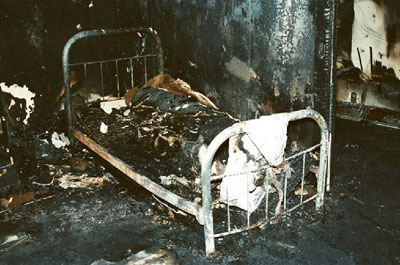 Incendiary: The Willingham Case
What it is: The aftermath of a contentious death penalty case deep in the heart of Texas.
Why you want to see it: Todd Willingham was by all accounts a mean, wife-beating bastard. But did he torch his house in 1993, killing his three young children? The experts interviewed in Incendiary work from the notion that, however unpleasant Willingham was, he wasn’t a homicidal arsonist. But the film is more about the fight over that label, and a curious bureaucratic resistance to fire investigators who don’t have a dog in this fight, but just want to see basic standards met.
The case boils down to investigators who relied more on impressions rather than chemistry, combined with a contaminated crime scene and a lot of presumed guilt. In fact, Willingham’s own defense attorney David Martin, admits that he was always convinced his client was guilty. The lines drawn are clear enough, but directors Joe Bailey. Jr. and Steve Mims add their own dabs of impressionism. Martin is interviewed outdoors in mic-shot of roosters crowing, while the experts who testify to the nature of arson investigators get the dignity of office and other interior locations for their interviews. Sure, it’s all part of the documentarian’s game. My sympathies lie with the filmmakers: the death penalty is bad, regardless of guilt or innocence. But loading the dice just furthers the divide between rural and urban, and will that get us anywhere?
The first few reels, with lots of closeups of things burning, have the air of a more sensationalistic Errol Morris, but the film eventually gets mired in a sea of official hearings. Willingham was on death row for twelve years, and was put to death by lethal injection in 2004. The Texas Governor who denied Willingham his appeals from death row, despite a building case for his innoncence? Rick Perry.
View the trailer.
Opens tomorrow at E Street.
—
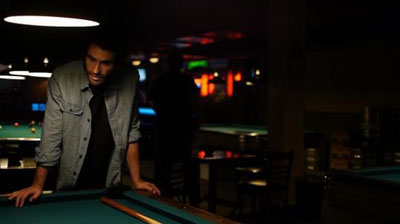 Country Music (Musica Campesina)
What it is: A fish out of water in Nashville.
Why you want to see it: Chile is the focus of a number of this week’s titles in the AFI’s Latin American Film Festival. These include Post Mortem (Oct. 1 and 5), a look at Santiago amid the violent turmoil of Pinochet’s bloody 1973 coup; Sebastian Silva’s Old Cats (Gatos Viejos) , (Oct. 1 and 2), which reunites the stars of his international hit The Maid; and Country Music, made with a crew from Vanderbilt University’s film School. Alejandro (Pablo Cerda) arrives in Nashville on a Greyhound bus, where his cash has been stolen and he’s left alone in a strange land. Long takes and long shots suggest the dry humor of early Jim Jarmusch, and the influence of photographer William Eggleston, whose image of the South is inviting yet sinister.
View the trailer .
October 1, 2, and 4 at the AFI Silver.
—
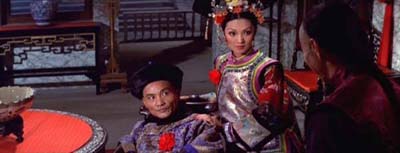 The Empress Dowager (1975)
Power Moves: The Empress Dowager Onscreen
What it is: Film depictions of the woman who rose from concubine to an imperial force for half a century.
Why you want to see it: In conjunction with the Sackler exhibition Power/Play, which looks at photographs of Empress Dowager Cixi, the Freer presents a series of films depicting the famed “dragon lady” persona. Titles include two 1970s productions from the great Shaw Bros. Studio (Empress Dowager, Sept. 30 at 7 p.m.) , and The Last Tempest (Oct. 2 at 2 p.m.); American director Nicholas Ray’s 55 Days at Peking (Oct. 7 at 7p.m.), and Bernardo Bertolucci’s The Last Emperor (Oct. 14 at 7 p.m.).
Fridays and Sundays at the Freer, through October 14. Free.
—
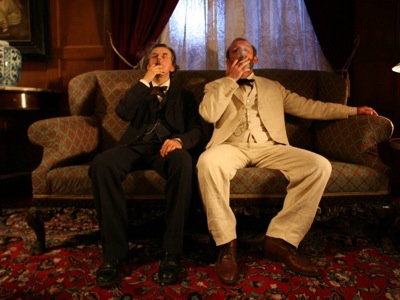 Mahler on the Couch (Mahler auf der Couch)
What it is: When Gustav met Sigmund.
Why you want to see it: It sounds like a meeting conceived for a Monty Python sketch, but after struggling with the infidelities of his wife Alma, composer Gustav Mahler sought counsel from Sigmund Freud. This tête-à-tête inspired a work of “classical music theatre” as well as this film by Percy Aldon (co-directed with his son Felix), director of Baghdad Café and Sugarbaby.
View the trailer.
At the Goethe Institut Tuesday October 4 at 6:30 p.m. $7.
—
Also opening tomorrow: 50/50, a comedy/drama inspired by screenwriter Will Reiser’s battle with cancer at age 24; and the French thriller Love Crime. We’ll have full reviews tomorrow.