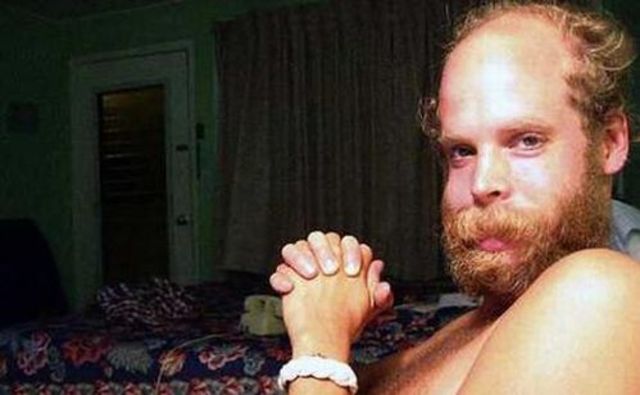
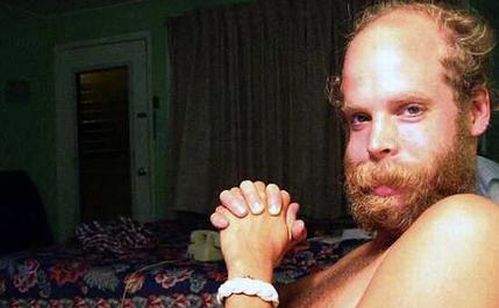
Intensely mercurial and wildly prolific in a musical career that spans nearly twenty years, Kentucky native Will Oldham, who performs as Bonnie “Prince” Billy is known for haunting live shows that capture the raw emotion of his studio recordings. A collaborator with a host of unlikely suspects, from comedian Zach Galifianakis and R. Kelly to Chavez’s Matt Sweeney and Dawn McCarthy of Faun Fables, Oldham continues to keep fans guessing what his next move will be. His most recent album, Wolfroy Goes To Town, comes out Tuesday. We spoke with Oldham at length about collaboration, changing your identity and what makes a city musically relevant.
You’ve been releasing music for nearly two decades. How has your songwriting process evolved in that time? Has it become easier or more difficult?
I think that the way that I look at it and it could be wrong, in terms of what the audience at large may think, but it seems to me is that the difficulty level is constant, but my perception the end result is a little bit better. It’s as hard as it ever was, but the quality of the songs benefit from years of experience. They seem to be stronger to me, they have a greater foundation. I like playing them more; they’re more interesting to sing lyrically and structurally.
You’re catalog includes several collaborative albums. I’m thinking specifically of Superwolf. How do those collaborations come about? Do you set out to write and record an album with the other individual, or do you bring them in after you’ve started writing?
Anything that receives a co-credit billing means that the conception of the songs was done together. So like with Superwolf, with [Matt] Sweeney, I guess the idea was that he’d been away, buried in another project for a long time, for a couple of years, inaccessible to his musical colleagues and friends. He was coming out of it, so to celebrate that I asked him if he’d want to work on putting a group of songs together and recording them. Or with Mick Turner, who records under the name the Marquis de Tren, he said, “I have lots of musical ideas. What would you think about trying to turn them into songs with lyrics and melodies?” It went from there. With [Emmett] Kelly and the Cairo Gang, the BLAH record, I’ve worked with them a lot over the last five and a half years. Usually I’ll bring him a song that’s pretty fully-formed, and say listen, “What would you think of trying to bring this kind of approach to it?” But with The Wonder Show of the World, it was, “Let’s build something from the bottom up, together.” So that’s what we did.
You’ve performed under several names over the years. I read a quote of yours that said, “The primary purpose of the pseudonym is to allow both the audience and the performer to have a relationship with the performer that is valid and unbreakable.” How do you think this bond is affected with each new pseudonym, if the heart of the artist is the same? Is it easier to write in a specific way if you have a different name? Is there an alter-ego associated with it?
A lot of my recognition of mass-produced media and arts as a powerful medium came from my experience as a kid watching movies, and getting enthralled by cinema, specifically, the old Hollywood cinema of the 30’s, 40’s, 50’s. There are these people like Marilyn Monroe or Cary Grant who have names that they weren’t born with but they are fully allowed to occupy these grand titles. If you are going to be perceived by the audience as something, and rather than be disarmed, or alarmed, or confused by what they see, it seems to be a productive move to be among the audience in terms of perception of this identity. You can create an identity that everyone is looking at, from one angle or another, but that everybody is looking at.
I’ve never been able to have perspective on my birth self, this Kentuckian that is the son of my parents and the brother of my brothers, or a guy with a Social Security number. I still have no idea who that person is, but I don’t want to be singing from a stance of ignorance. I want to be singing from some sort of confidence, or some direction and I can do that by inhabiting the identity of the pseudonym. It’s the created structure, character, being, similar to Marilyn Monroe saying, “This is the person that everybody is looking at in a photograph or a movie, and this is the identity I’m developing, in conjunction with the points of view of the audience.”
Fascinating.
When you make up your name, you have to. People want something that’s beyond three-dimensional, that’s not related to the dust that I’m necessarily made of.
In the theme of taking on new identities, you got your start in acting at a young age, continuing to act in independent films in recent years. How has acting influenced your songwriting? It sounds like the two are pretty intertwined.
The two are pretty intertwined. My interest in making music fully came from my interest in seeing what these people had made, actors, directors, etc. When I became an early adult, say age 17, 18, I realized it was a very complex, top-heavy process. It’s a simple experience to sit in a theater and watch a movie, but it’s not a simple task to make one. I wanted to be involved with a process that was more like the experience that I imagined it to be, and that came through making records instead of making movies. I do act every once in a while, but my whole way of looking at work is at odds with the movie-making process, because it’s such an unwieldy process. Making a movie requires far more people than making a record does, and a lot more money. I like to think that less is more, but that’s only because I don’t know how to handle large amounts of money or large amounts of people. Some people can do that. I will never be one of those people.
How did your parts in “Trapped in the Closet” and the video for “Can’t Tell Me Nothing?” come about? How did you end up on Zach Galifianakis’s farm? Have you considered writing a song with Galifianakis, or Kanye West, or R. Kelly?
Zach came up with the idea before we met each other. He contacted me years before the Kanye video. He asked, “Would you ever consider being a part of my act one night? You would come out and sing the punchline, with a guitar.” I said, “That sounds great, but I don’t know if I can fly to California on a week’s notice just to do that, but maybe one day.” We met each other on the set of the show Wonder Shozen; we wrote an episode together. Then indeed, I was in California one time when he had a comedy show [at Largo in Los Angeles] and I sang a couple punchlines. There was an extended moment where he was sitting at the piano and I was sitting next to him, and it was my job to try and disarm him and make him laugh during his own routine.
He was always saying, “You’ve got to come visit the farm,” and at one point I was driving around, at a loss for what to do with myself in the eastern United States. And I said, “You know what I’m going to do? See if Zach is at his farm, and go there.” I needed to chill out somewhere, get away from everybody. Things were really getting to me. Zach had made the farm sound so peaceful, so I called him, and he said, “Yeah, come to the farm.” when I got there, he said, “I didn’t tell you, but we’re making a Kanye West video.”
Trickery.
Yes, I just happened to be there. And as for “Trapped in the Closet,” I had been a student of the records of R. Kelly for a number of years. I was working on some job in Texas, and I met a woman who had produced the “Trapped in the Closet” videos, and she was very surprised by the depth of my awareness and regard for R. Kelly and his work. She said, “We’ve got to get you two together some time.” Then, a year and a half later she called and said “We’re shooting more ‘Trapped in the Closet’ videos, and there’s a part for a white police officer. What do you think?” Within a week, I was at R. Kelly’s house in the suburbs of Chicago rehearsing. It was very surreal and dreamy. It was like a dream come true, except a dream I would have never thought to dream because it was so outlandish.
What are you listening to right now? As we head into fall, do your tastes change seasonally?
My tastes in music and alcohol change with the seasons. The last few weeks I’ve been working on an album with a group based out of Glasgow, Scotland and I just finished my work on that record yesterday morning. I’m gleefully getting to listen to music again, because I’ve just been listening to these songs for the past few weeks. I’ve been consistently excited over the last few years by the label Sublime Frequencies. There’s a film and soundtrack on there by a woman named Olivia Wyatt that’s about rural Ethiopian music. I’ve been rediscovering the music of Frank Sinatra and the Everly Brothers. I just got back from a little trips to Hawaii, and New Orleans, and those are parts of the country that have retained an identity that’s completely blurred in terms of the music being old and new at the same time.
So, you live in Louisville. How do you think the music scene there compares to other small cities, like Baltimore and D.C.? Baltimore’s had a surge of national attention in the last three years. How do you think Louisville is faring in that regard?
You have to take this with a grain of salt. In terms of activity, I’m getting into some different ages and I’m sure there’s lots of things going on I have no awareness of whatsoever. My impression of the Louisville scene is that it’s about to swing into a rise in identity. I feel as if there were a couple of years where there were certain Louisville musicians and members of the community looking outward for influence and audience. There are really strong musicians here, but the excitement of what’s going on in Louisville and what goes on in any city during their strong period is when they look to each other for inspiration.
It can get confusing, I would imagine, right now if you were starting to play music. A greater portion of your attention is devoted to the Internet than it was when I was in say my teens, twenties or even thirties. You’re looking at the Internet and a greater portion of the world and not at your peers and your community. It’s probably more of a challenge to understand the power of localism and your physical geographically close community. You identify with a person from Spokane, a person from Montreal, and therefore your music might have sort of a nebulous identity. There’s a limited capacity for collaboration and growth with somebody who is at the end of the day, a thousand miles away or decades away if you’re learning from music from the ’60s, ’70s, ’80s, ’90s.
As great as the music has been in Louisville the past few years, having an individual identity has not been one of its strong points the last few years, but I think that that is bound to come again because there are definitely some individuals here making great music. Whenever a community experiences some sort of surge in one musician, two bands, whatever, it starts to allow people to put their blinders back on in a constructive way and look back at what’s going on at home. I think that’s when each scene has their moments again of being insanely vital and exciting.
Will Oldham performs as Bonnie “Prince” Billy at the Birchmere in Alexandria on Sunday, October 2 at 7:30 pm. Phantom Family Halo opens. Tickets are available here.