Martin Austermuhle
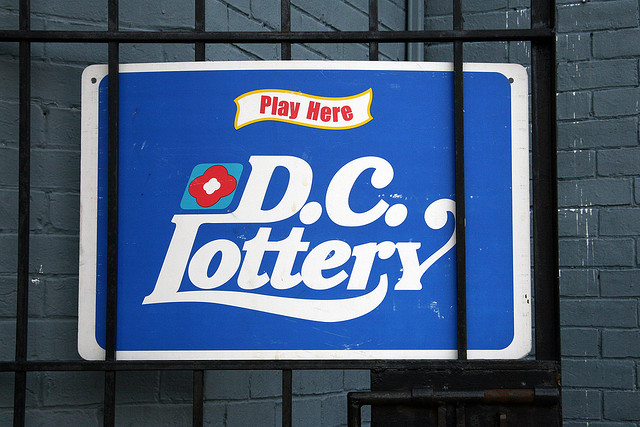 Photo by sissnitz
If yesterday’s Ward 5 town hall on the District’s controversial new i-Gaming platform is any indication, it’s not really the idea of online gambling that has residents put off — but rather how the idea came to be and where the money it’s supposed to generate will go.
During the town hall, part of a citywide tour by D.C. Lottery officials to sell residents on the new platform that was approved by the D.C. Council late last year, Buddy Roogow, the lottery’s executive director, explained how the idea emerged, why it would be beneficial to the District and what steps were being taken to protect users in what would be a first-of-its-kind state-run online gambling system.
The i-Gaming system that the city has envisioned, he said, would feature four games (Texas Hold ’em Poker, Blackjack, Bingo and e-Scratch), would be limited to people physically within the District and would include a $250 weekly wager cap and deposit limits that would restrict how much any one user could gamble or lose. (Under the caps, a single player could only lose $13,000 a year.) It would not, he stressed, lead to brick-and-mortar casinos, nor would i-Gaming hot spots be set up in schools, libraries, recreation centers or D.C. government buildings.
Roogow explained that i-Gaming was necessary to stem the flow of D.C. residents and tourists that travel to Maryland, West Virginia, New Jersey and Pennsylvania to gamble. Drawing links to “Prohibition,” Ken Burns’ series on the U.S. in the era when alcohol was outlawed, Roogow also appealed to the audience’s libertarian instincts — millions of people spend time and money at unregulated off-shore gambling websites, so why shouldn’t the District seek to capture some of that market?
The market, he added, could be significant — in its first three years, i-Gaming is expected to draw in $13 million, with some nine million a year expected after that.
While the libertarian sentiments seemed to ring true with many of the Ward 5 residents in attendance — one admitted to traveling beyond the District to gamble, another reminisced of the corner card games that used to be played before the lottery was established in the city — many expressed concerns over where the money would go. Councilmember Michael Brown (I-At Large), i-Gaming’s chief proponent, was called up to explain how District residents could be assured that the promised revenue could go to school and social services. The money couldn’t be earmarked, he said, but it was his priority to see it go to services that were cut during past budget cycles.
An undercurrent of discontent over how i-Gaming was passed into law also remained, foreshadowing complaints and concerns that may be echoed at the seven town halls to come. Brown has been accused of sneaking the proposal into a budget bill without public hearings, a claim he refuted in a letter to his colleagues in September. (Last month, Ward 6 Councilmember Tommy Wells introduced legislation that would repeal i-Gaming.)
For David Grosso, who is challenging Brown in next year’s election, the hearings came at the wrong end of the process, a complaint made by organized i-Gaming opponents.
“These town halls are a dollar short and a day late,” he said. “In the end, these folks come in here and try to defend something that was already pushed through without any proper process. Ultimately, legislative process is more valuable than this. If this had been done right, we would have had hearing in the council, we would have worked through the issues, we could have brought in experts and bench-marked against other jurisdictions. Anyone in there had to be frustrated.”
For Eric Prag, a Ward 6 resident and owner of All In Enterprises, which organizes live poker games, that frustration is certainly felt — but it’s more with the delays than with the process.
“I just want to play poker,” he said, noting that he recently lost $300 on Full Tilt, an online gaming site that was recently targeted by federal prosecutors. “It’s an avocation of mine, it’s a fun recreation that I play. I love playing poker, and I want to have the opportunity to do it in D.C.”
If all goes to plan, the i-Gaming platform could be fully operational by mid-2012. Still, the council’s ultimate decision on whether to move forward with the program could well rely on what comes of these town halls.
Also: Mike DeBonis