Martin Austermuhle
Under current D.C. law, prostitution is illegal. Simple enough, right? Well, no.
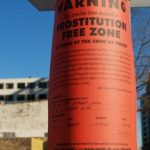
Prostitution still happens, so, in 2006, the D.C. Council gave the Metropolitan Police Department the power to designate “prostitution-free zones,” areas in which any two people gathering for allegedly engaging in prostitution-related activities can be asked to disperse and, if they don’t, face arrest. The zones can be designated for up to 240 hours, or 10 days. The most recent zone was designated for an area near 59th Street and Eastern Avenue NE from October 27-31; another zone was famously declared during President Obama’s inauguration.
Now the one member of the Council is seeking to extend that policy: on Tuesday, Councilmember Yvette Alexander (D-Ward 7) introduced legislation which would allow police to add a new category of prostitution free zone: permanent. Alexander told DCist that the change has come in response to what she called an “epidemic” of prostitution in her ward, primarily along Eastern Avenue and Minnesota Avenue.
“It’s more than an occasional thing; it’s a way of life. They found a home in Ward 7,” Alexander said.
Her proposal hasn’t just attracted the support of a handful of her colleagues — it’s also part of an effort that crosses the District line. In October, Prince George’s County Councilwoman Andrea Harrison proposed legislation that would similarly allow police to declare prostitution-free zones on her county’s side of the border. According to Alexander, this is part of a one-two punch against prostitutes and johns who jump between D.C. and Maryland to avoid police.
Alexander’s proposal is above and beyond what Harrison has said she wants — her legislation would allow the zones to be designated for 480 hours, or 20 days. That, some say, could be a problem.
During the debate that established the District’s current ten-day prostitution zones, legislators had to balance tools to fight criminal activity and infringements upon civil liberties. A report from the Committee on Public Safety and the Judiciary noted: “The Court has looked disfavorably on long periods where civil liberties are limited, and current drug free and gun free zones in the District only last 5 days. The Committee believes 10 days will pass judicial scrutiny.”
Civil libertarians have pointed out that the mere act of carrying multiple condoms in a designated area would be enough for police to ask an individual to disperse. In 1987, the D.C. Court of Appeals ruled against a D.C. law allowing arrests of prostitutes who merely beckoned possible clients, saying that simply acting or looking like a prostitute would not be enough to sustain a conviction.
Advocates for sex workers additionally argue that the zones merely push prostitution to other areas and marginalize those involved in it:
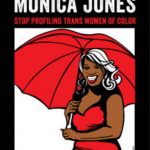
Prostitution Free Zone laws, like most punitive approaches to commercial sex work, do further damage by disproportionately affecting the health and safety of the District’s most vulnerable sex workers – those who work on the street. Sex workers are already marginalized and discriminated against by both the larger community and the police due to their race, ethnicity, and/or gender. The District of Columbia currently has an HIV AND AIDS rate of epidemic proportions, affecting people of color and sexual minorities at shockingly disproportionate rates. The Prostitution Free Zones law increases the difficulty of survival and decreases the safety of street based sex workers by pushing sex workers into darker and more isolated areas where they feel unsafe and more vulnerable to harassment, assault, and robbery.
Alexander sees the permanent zones as more akin to a restraining order, allowing police to more easily disperse individuals suspected of engaging in prostitution and arresting them if they return. Along with Harrison’s measure, she said, it could help crack down on the prostitution that’s plagued parts of her ward.