 Photo by Doug Duvall
Phew! It’s been quite the year, huh? In this periodic end-of-the-year series, we look at the people and places that made 2011 what it was. In this installment, it’s government support for the arts.
If there was any constant refrain this year at all levels of government, it was “Cut. Cut. Cut.” Federal, state and local governments spent much of 2011 paring away what they could in endless attempts to rein in government spending. Our year of austerity wasn’t as severe as in, say, Greece or Portugal, but across the board there were deep cuts in all kinds of government funding.
But cuts to some arts funding programs were particularly severe. In April, after the first of what would become a sick running gag of near-shutdowns of the federal government, the continuing resolution that kept things going carved more than $38 billion from the fiscal 2011 federal budget. Among the many programs targeted were the rather obscure National Capital Arts and Cultural Affairs grants, administered by the nearly-as-arcane U.S. Commission on Fine Arts.
The program, established in 1985 sends much-needed operational funds to non-federal arts institutions around Washington. In essence, it encourages visitors to focus on cultural programming beyond the museums that line the National Mall.
In 2009 and 2010, the total cost of the grant program was $9.5 million, and some tiny arts groups counted on their share—calculated by a strict, data-driven formula—for as much as one-quarter of their operational budgets. When Congress and the White House struck that deal in April, funding dropped to just $3 million. Now, having received much smaller awards than in years past, some recipients like Arena Stage and GALA Hispanic Theatre have had to reschedule or altogether drop parts of their current seasons.
At a more local level, it was something of a rocky year for the D.C. Commission on the Arts and Humanities. Mayor Vince Gray did not appoint a full-time director for the agency until October, when he tapped Lionell Thomas to head it up. In the mean time, the DCCAH’s had roughly $3.7 million to distribute in grant money this year, which it parceled out in 227 awards after making its grant system more competitive than in past years.
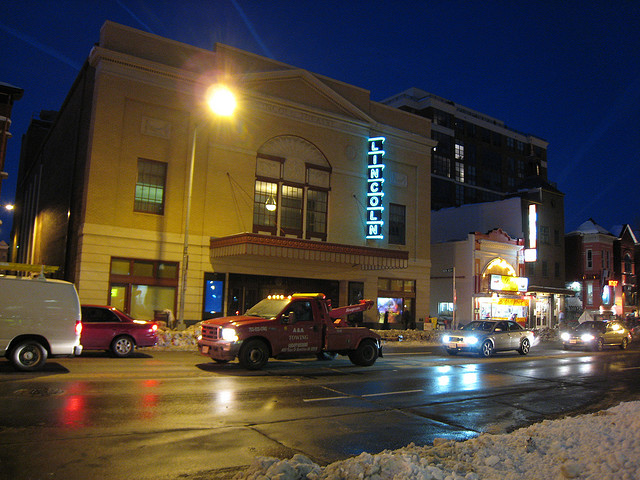
Meanwhile, some neighborhoods’ artistic pillars fell on even harder times. The Lincoln Theatre at 13th and U streets NW was racing toward bankruptcy until the DCCAH announced last month it was seizing control of the 90-year-old venue. The theater’s new municipal operators’ first programming choice: A four-week run of The Girl With the Dragon Tattoo.
After that, who knows? As Thomas said last week at a press conference at the Lincoln, “We don’t have this completely figured out yet.”
At least they’re trying. The decline in government support for the arts may be taking its toll across D.C., but hey, at least we don’t live in Kansas, where one of Gov. Sam Brownback’s first orders of business upon taking office this year was chucking that state’s arts commission altogether.