DCist’s highly subjective and hardly comprehensive guide to the most interesting movies playing around town in the coming week.
—
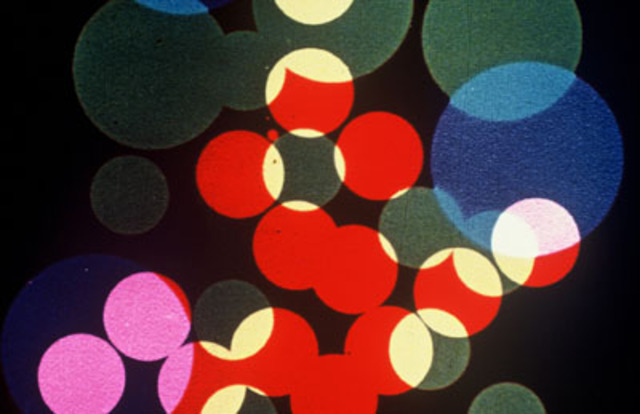
 Kreise (Oskar Fischinger, 1933, color, sound, 35mm). Image © Fischinger Trust, courtesy Center for Visual Music
Optical Poetry: Oskar Fischinger Classics and Rare Works
What it is: Masterpieces of abstract film at the National Gallery.
Why you want to see it: The AFI’s three screens are all dedicated to first-run movies next week, but the National Gallery of Art has plenty to whet your repertory appetite with three very different programs this weekend. First up are the short animated films of German-American Oskar Fischinger, which have been compared to the paintings of Wassily Kandinsky. Both painter and filmmaker found inspiration in music (Fischinger began his career studying violin and organ building), so it’s no surprise that the gallery is presenting Fischinger’s work in conjunction with the Center for Visual Music. The two-part program will be introduced by Cindy Keefer, director of the Center for Visual Music. See an example of Fischinger’s continued influence on modern filmmakers in the impeccably timed music video for “Smoke,” by Japanese pop star Keigo Oyamada, who took his stage name Cornelius from Planet of the Apes.
View Fischinger’s Motion Painting No. 1.
Saturday, January 7 at 3 p.m. (classic) and 4:45 p.m. (rare works) at the National Gallery. Free.
—
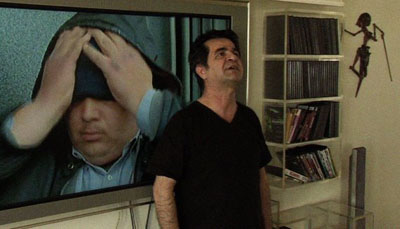 This is Not a Film
What it is: The Freer’s 16th annual survey of a provocative national cinema.
Why you want to see it: The Iranian Film Festival 2012 opens with This is Not a Film, a meta-movie of most unusual provenance: the film was “secretly shot by codirector Mojtaba Mirtahmasb on an iPhone and smuggled into France on a USB drive hidden in a cake.” Co-directed by Jafar Panahi (The Circle, Offside), who was arrested in 2010 and banned from giving interviews or making films, This is Not a Film is cinema at its most forbidden – by the state. Festival highlights include the lesbian melodrama Circumstance (January 13 and 15), which Ian Buckwalter reviewed here, Abbas Kiarostami’s Koker Trilogy (January 27 and 29), and Here Without Me (February 17 and 19), an adaptation of Tennessee Wiliams’ The Glass Menagerie.
View the trailer for This is Not a Film.
This is Not a Film screens Friday, January 6 at 7:00 pm and Sunday January 8 at 2:00 pm at the Freer. Free.
—
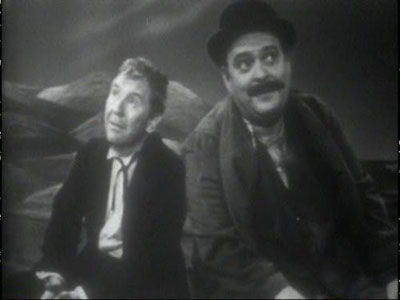 Burgess Meredith and Zero Mostel.
What it is: A rare television production of Samuel Beckett’s absurdist masterpiece.
Why you want to see it: Originally broadcast on the WNTA-TV series Play of the Week, this 1961 production came only five years after the play’s first English-language performance. One wonders how audiences at the time reacted to Beckett’s comic existentialism, but Estragon and Vladimir were in good hands with Zero Mostel and Burgess Meredith. Preceded by the short Film, the only work that Beckett wrote for the screen, starring stone-faced silent movie icon Buster Keaton in one of his last roles.
View Samuel Beckett’s Film in its entirety (though it will look much better in the 35mm print the Gallery will be showing).
Sunday, January 8 at 4:30 at the National Gallery of Art. Free.
—
Sometimes Aunt Martha Does Dreadful Things
What it is: The kind of transvestite horror movie that only 1971 could produce.
Why you want to see it: The Washington Psychotronic Film Society is starting off the new year in a 70s mood, and if you missed Sean Connery in last week’s screening of John Boorman’s Zardoz, this week returns to Psychotronic’s low-budget roots with the sole directorial credit from Thomas Casey. One IMDb reviewer warns the unsuspecting viewer about the misleading title: “the truth is that Aunt Martha CONSTANTLY does dreadful things.” Leading man Abe Zwick never made another film, but co-star Wayne Crawford (credited here as Scott Lawrence) went on to a long career, starring in and co-writing the 80s classic Valley Girl and appearing regularly on the short-lived comedy-horror series American Heart.
View a dreadful clip.
Monday, January 9 at 8:00pm at McFadden’s. Free.
—
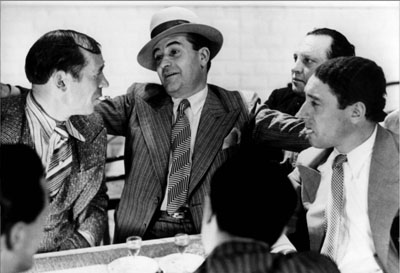 Justin de Marseille
What it is: The National Gallery’s brief look at a neglected pioneer of cinema.
Why you want to see it: Father of celebrated director Jacques Tourneur (Cat People, Out of the Past), Maurice Tourneur’s first film credits came in 1912, when he made silent films at the French studio Eclair. He moved to America in 1914 to run a studio in Fort Lee, New Jersey, a town sometimes called “America’s first Hollywood,” and grew to be a major American director, although his work is seldom seen now. In the 1930s Tourneur returned to France, where he made a number of crime dramas, including Justin de Marseille (1935), a tale of gangsters and opium dens on the docks of Marseille.
View a clip from Justin de Marseille.
Justin de Marseille screens Saturday January 7 at 12:30 at the National Gallery. Free.
—
Also opening this week, two very different coming-of-age tales: Norwegian Wood, an adaptation of the novel by Haruki Murakami, whose work is often considered unfilmable; and the Sundance favorite Pariah. We’ll have full reviews tomorrow.