 Photograph courtesy of Focus Features
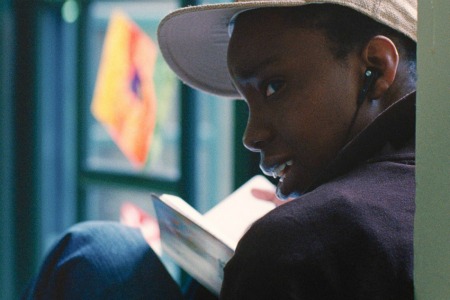
Many of the scenes in Pariah, Dee Rees’ debut narrative feature, are shot in shallow focus closeups, actors’ faces filling much of the screen as the background is lost in a soft blur. It’s an unforgiving shot for an actor, every subtlety — and, potentially, deficiency — of their performance magnified by the proximity of the viewer. But what it demonstrates is an overriding confidence in the abilities of her performers on the part of Rees. That confidence isn’t misplaced: The intensity of these performances, and their gorgeous rendering on film by cinematographer Bradford Young, carry a film that could easily have sunk into Sundance-indie inspirational cliché.
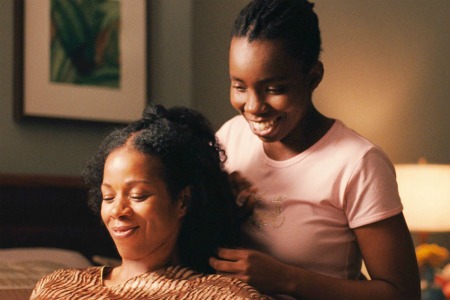
Adapted from her own 2007 short film of the same title, the film stars (as did the original) Adepero Oduye as Alike, a high school senior in Brooklyn who is living two lives. In one, she’s the straight-laced daughter of a churchgoing mother Audrey (Kim Wayans) and police officer father Arthur (Charles Parnell), wearing the girlish clothes that mom picks out for her and getting straight A’s. In the other, she accompanies her best friend Laura to a local lesbian dance club, trading in form-fitting pink tops (mom seems hugely concerned that she should wear clothes that “show off your figure”) for formless rugby tops and a baseball cap. It’s the kind of double life that’s hardly sustainable for a high schooler living at home, and at the film’s start, cracks are already beginning to show: Alike is breaking curfew, mom is already ready to forbid contact with Laura, and Alike’s resentment of the strict rules is too great to hide.
Audrey does, of course, attempt to sever contact between Alike and Laura, finding her a “suitable” friend in Bina (Aasha Davis), the daughter of a co-worker and fellow parishioner. Audrey already suspects that her daughter might not be interested in boys — Alike isn’t really savvy enough to hide her sexuality as well as she thinks she is — and seems to believe if she can get her to hang out with someone more girlish and less obviously homosexual than Laura, that Alike might pass through this “phase”. What Audrey doesn’t suspect is that Bina might not be the heterosexual influence she thinks her daughter needs. The relationship that blossoms out of this setup drives the film towards the dark familial confrontations one expects from the moment we meet Audrey.
 Photograph courtesy of Focus Features.
The way the plot develops is unremarkable and fairly standard for both coming-of-age and coming-out-of-the closet stories. The badly kept secrets, the nervous fumblings, the euphoria of sexual discovery, and the crash of parental discovery for the most part follow formula. But Rees does throw in a few curves to keep things interesting, particularly when it comes to the redemption/lessons-learned part of the story. Things here aren’t so neat and tidy, and the film is stronger for it.
Rees also draws some focus away from Alike with a couple of well-placed subplots. One involves Laura’s uncomfortable home situation — which, if Alike’s family was less firmly middle class, could be hers as well. It’s a decision which addresses any concerns that the movie may perhaps cushion Alike’s fall by giving her a better financial and educational safety net than a lot of out teens who find themselves with uncaring parents.
The other involves the increased detachment of Alike’s father from his family. He and his daughter both make a roundabout attempt to confront each others’ secrecy in one of the film’s best scenes, a late-night father-daughter talk in which both of them dance around the things they’re hiding. Both of them choose to believe what they want to believe rather than face obvious truths.
Dees keeps the camera on Alike so much that in certain scenes Alike might have entire conversations where we barely see the other person talking. We feel the isolation she feels, stuck within a sometimes solipsistic frame where everyone she tries to make a connection with ends up casting her out. Those close-up camera setups shine all the light on Oduye, who never shies away from the attention. We feel her bottled anger, her sullen resentment, her glimmers of hope, and her crushing disappointments just as intensely as she does thanks to Oduye’s brave commitment to the character. When a film follows a familiar path, that path can seem too easily traveled; but thanks to performances like Oduye’s, nothing in Pariah seems quite so simple.
—
Pariah
Written and Directed by Dee Rees
Starring Adepero Oduye, Kim Wayans, Pernell Walker, Charles Parnell
Running time: 86 minutes
Rated R for sexual content and language.
Opens today at E Street Cinema.