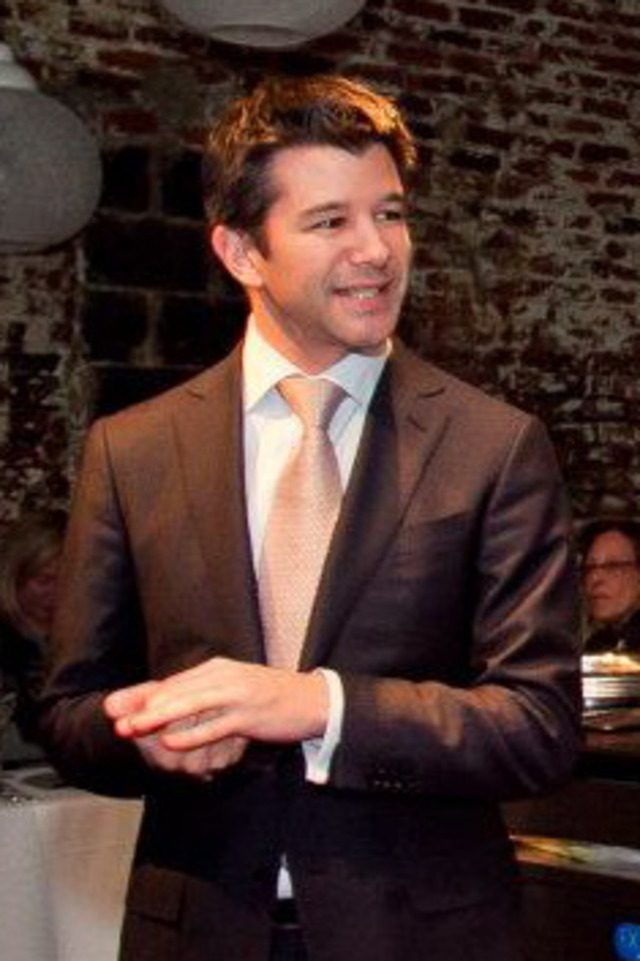
 Kalanick (via Facebook)
Earlier today, D.C. Taxicab Commission Chairman Ron Linton accused Uber, the smartphone app that hails upscale livery sedans when they are not servicing their private clients, of operating illegally since its debut here late last year.
“We license public vehicles for hire under two arrangements,” Linton told DCist after a D.C. Council hearing on a taxicab reform bill. “One is a time and metered distance, that’s a taxicab. The other is a fixed rate by appointment, and that’s a limo. They don’t qualify under either circumstance.”
Not true, Uber’s CEO, Travis Kalanick said in an interview with DCist.
“We don’t go and launch in a city until we know we’re legal,” he said. “We’re not aware of any regulation that says our pricing model can’t be the way it is.” In Washington, Uber charges a base rate of $7, then adds $3.25 for each mile traveled plus 75 cents for each minute a car is hired. D.C.’s regulations on limousine services state that sedans can charge for both mileage driven and time hired.
Uber does not have a fleet of its own. Rather, it signs up limousine companies and provides drivers business when they are not ferrying around their regularly scheduled clients.
“We’re a new technology and we’re trying to help existing limo companies connect with new customers,” Kalanick said. “We’re helping coordinate a convenient and classy ride.”
Whether Linton has considered that explanation is unclear. Rachel Holt, Uber’s general manager in D.C., said she’s had only “low-level” meetings with the Taxicab Commission since Uber began setting up its operations here, but none with the chairman.
On its company blog today, Uber compared Linton’s statement to an incident when the app first launched in San Francisco in 2010.
A few months after Uber’s founding that June, the City of San Francisco sent the company a cease-and-desist letter, arguing that it was in violation of local taxicab regulations. And there, too, the question was over whether Uber was operating as a cab company or a limo service.
In California, Kalanick said, taxis are regulated by municipalities, while limousines are overseen by a state commission. Uber obviously has continued operating in San Francisco and has since expanded to Los Angeles, Seattle, Chicago, Boston, New York and Paris, in addition to Washington. But the issue is still outstanding, he said. The California Public Utilities Commission, which oversees limousines, has not made a ruling in the 14 months since San Francisco served its notice.
“There’s still a conversation with the state of California, but it’s moving obviously very slowly,” Kalanick said. “The question is whether we’re Orbitz or American Airlines.”
Still, with respect to D.C., Kalanick is confident Uber isn’t breaking the rules.
“We’re confident that we’re operating legally and we’re providing a value-added service for folks who want to get an efficient way to get a Towncar,” he said. “We’re happy to talk to the chairman about his concerns.”