Martin Austermuhle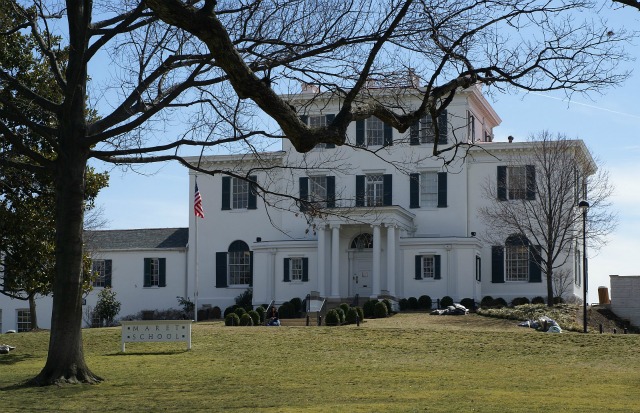
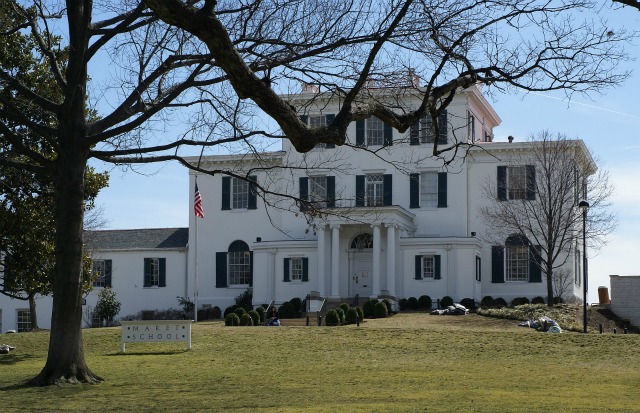 The Maret School was once the Woodley Mansion, from which the surrounding neighborhood took its name.
As we delve deeper into the histories of some of the District’s neighborhoods for coming installments, this week we’re going a little easy — these are two neighborhoods that took their names directly from famous inhabitants or the estates that they built. (See also Brentwood, Brookland and Petworth.)
By the time that Washington was established as a capital city, the areas we now know as Woodley Park and Cleveland Park were bucolic rural settings where the well-to-do and well-connected built themselves country estates. Revolutionary War hero Gen. Uriah Forrest was the owner of a large parcel of land known as the Rosedale Estate in present day Cleveland Park that was gradually divided into smaller parcels, one 250 acre chunk of which was purchased by Philip Barton Key, a lawyer, congressman and uncle to Francis Scott Key.
In 1801, Key built what would become his home — the Woodley Mansion, a Federal-style home that sits at the heart of today’s Maret School. After Key’s death, President Martin Van Buren rented the estate in 1837 as a summer getaway from the oppressive heat of the swampier lowlands where the capital city was built.
As the area began developing some 70 years later, residents of the surrounding neighborhood decided that taking the name of the famed estate could only help property values; Woodley Park was born.
Cleveland Park to the north wasn’t much different. In 1885, President Grover Cleveland bought a stone country house close to present-day 36th and Newark Streets NW. After losing his re-election bid three years later, though, Cleveland sold the estate. His neighbors didn’t much care — when three new subdivisions were built, two, Cleveland Heights and Cleveland Park, took his name. (The third was called Oak View.) Eventually, Cleveland Park subsumed the other two.
Ironically enough, when Cleveland won back the presidency in 1892 and required yet another summer home, he opted to rent the Woodley Mansion instead of choosing the neighborhood just up the road that was named for him. (Cue jokes about no one liking Cleveland Park.)
Both neighborhoods benefited from the construction of the Chevy Chase suburb in 1890 and the subsequent development of the Connecticut Avenue corridor to connect it to Washington, including the Taft Bridge that crossed the Rock Creek gorge.