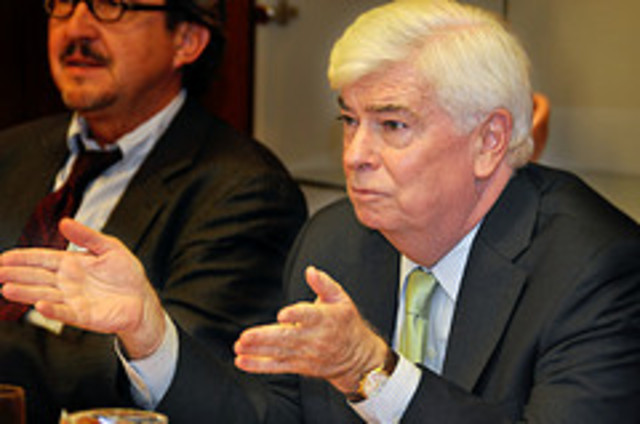
 Dodd. (Photo by Flickr user Veiligheid en Justitie)
As chairman of the Motion Picture Association of America, former Connecticut Sen. Chris Dodd is one of the most vocal backers of the Stop Internet Piracy Act, better known as SOPA. In the same capacity, it seems he’s also got little truck for the numerous “blackouts” happening across the Internet in protest of the bill. Major sites like Wikipedia, Reddit and Craigslist have gone dark—so, best of luck looking up Star Trek characters, exchanging funny photos or selling your old futon—and even local concerns like Brightest Young Things are participating.
Similarly, other content-sharing sites like Tumblr and Flickr are offering users the ability to black out their profiles today in protest of the bill, which, if passed, would require websites to delete links from their search results to sites deemed “illegal” by the Justice Department. Internet companies from Google on down oppose SOPA for obvious reasons—it would make the creation of online editorial content incredibly arduous—and restrict the ability of users of social networking sites to share content with each other. Facebook founder Mark Zuckerberg just said as much in a profile update.
Even though President Obama has said he will not sign SOPA or its companion bill, the Protect IP Act, in their current forms, and Congressional support for the measures is eroding, entertainment-industry groups like the MPAA are still pushing for them. And Dodd is not impressed by the blackout protest, calling it “irresponsible” and a “gimmick.”
Only days after the White House and chief sponsors of the legislation responded to the major concern expressed by opponents and then called for all parties to work cooperatively together, some technology business interests are resorting to stunts that punish their users or turn them into their corporate pawns, rather than coming to the table to find solutions to a problem that all now seem to agree is very real and damaging.
It is an irresponsible response and a disservice to people who rely on them for information and use their services. It is also an abuse of power given the freedoms these companies enjoy in the marketplace today. It’s a dangerous and troubling development when the platforms that serve as gateways to information intentionally skew the facts to incite their users in order to further their corporate interests.
A so-called “blackout” is yet another gimmick, albeit a dangerous one, designed to punish elected and administration officials who are working diligently to protect American jobs from foreign criminals. It is our hope that the White House and the Congress will call on those who intend to stage this “blackout” to stop the hyperbole and PR stunts and engage in meaningful efforts to combat piracy.
By the way, notice how ugly the MPAA blog is? If the organization didn’t spend so much time chasing after websites, perhaps it could hire one of them to, you know, come up with a more attractive design.