Martin Austermuhle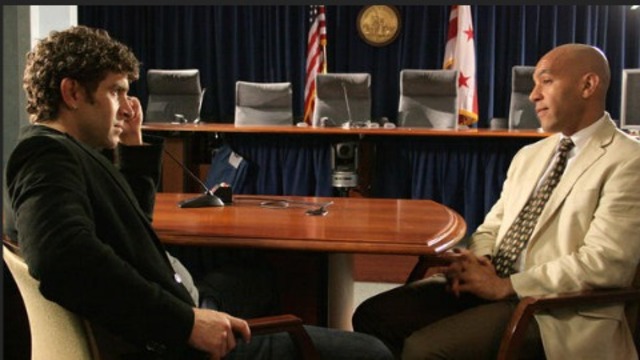
 Hidden City’s Marcus Sakey chats with the Post’s Tim Craig about Marion Barry.
I’ve never watched the Travel Channel’s Hidden City, but the premise sounds pretty great:
Thriller novelist Marcus Sakey knows good stories—and bad behavior. To research his bestselling books, he’s traveled the country with cops and killers alike. Now Marcus goes from city to city to identify three crimes or criminals that reveal the real character of the place.
Tomorrow at 9 p.m. Sakey turns to the District, where he seeks to uncover the city’s real personality by focusing his sights on the Beltway Sniper, the life FBI double agent Robert Hanssen and our own mayor-for-life Marion Barry. In the process, he interviews a victim of the Beltway sniper and residents affected by his reign of terror, security experts and counter-intelligence officials on Hanssen’s notorious betrayal, and Post reporter Tim Craig and Ward 8 activist and D.C. Council candidate Sandra “S.S.” Seegars about Barry’s infamous 1990 arrest and subsequent comeback. (See a few teasers here.)
In terms of the subject-matter, it’s pretty solid for national TV. Though the Beltway sniper affected the area around the city more than it did the city itself, part of what he did that inspired so much fear is choose every day locations where just about anyone could be a victim. I distinctly remember news stations encouraging motorists at gas stations to either remain in their cars as they filled up or engage in evasive maneuvers to avoid being picked off. (Of course, there have been local criminals of note that could merit mention, and how do you talk about crime in D.C. without at least bringing George Pelecanos on?)
As for Hanssen, his story (and the betrayal of U.S. secrets to the Russians) is certainly impressive and speaks to a seedy and often unknown history of the District that dates back to the country’s founding.
And Barry, well, he’ll always be our Barry. It’s impressive that his arrest still defines the District in so many ways, even though 22 years have passed since it happened. We haven’t had a chance to see how Sakey approaches it, but there’s certainly a story to be told in how Barry’s fall and rise speaks to a larger and largely misunderstood history of the District. (HBO’s The Nine Lives of Marion Barry masterfully handled this.) We trust that both Seegars and Craig will be able to put Barry’s story into a broader context.
Until the show airs, busy yourself with Ghosts of D.C., a fantastic blog that digs into the funny and fascinating of the city’s history. Also, look into reading Jeanne Fogle’s A Neighborhood Guide to Washington, D.C.’s Hidden History or John DeFerrari’s Lost Washington, D.C.