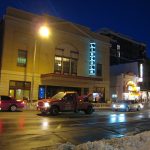
 Arena Stage had to downsize its current season because of cuts to a federal arts grant. (Photo by IVlax)
We’re still working our way through all the details of President Obama’s proposed budget for fiscal year 2013, but in checking up on one tiny federal program I’ve been following for a while, the documents released by the White House today aren’t a promising harbinger.
The National Capital Arts and Cultural Affairs program, a minuscule-by-comparison grant administered by the almost-as-obscure U.S. Commission on Fine Arts, has been cut to the bone over the past two years; and it wasn’t that big to begin with, but its awards went a long way in funding many of the District’s non-federal arts institutions.
I wrote several articles about the program for the City Paper last year, including a feature in April not long after the first of several fiscal showdowns between the White House and Congress. The NCACA program, which topped out at $9.5 million in fiscal 2009 and 2010, wound up being cut to just under $3 million for 2011 and $2 million for 2012; Congressional Republicans wanted to axe the program entirely—the shrunken outlays were the compromise.
The NCACA grants, which are awarded in May, are distinct in that they are formulaic, not merit-based. The first 70 percent of NCACA’s total funding is divided evenly among the 25 recipient groups—last year’s base was about $84,000—while the remaining 30 percent is parceled out based on each organization’s operating income as a percentage of the combined operating income of all beneficiaries. There’s also a ceiling to prevent the largest recipients from getting too much.
But because of the math, the an NCACA grant makes up either a sliver of an organization’s total operational income—the $342,000 the Kennedy Center got last year was 0.37 percent of its $92 million purse—or a significant portion of a smaller beneficiary’s budget. Such has been the case for groups like Dance Place, a Brookland studio that in 2010 depended on its $291,000 award for about a full quarter of its budget. After last year’s cuts, the $87,000 it received was about 6 percent of its 2011 budget. Even for a midsize recipient like Arena Stage, which saw its grant drop from $430,000 in 2010 to $131,000 last year, cuts to NCACA funding led to the removal of a show from its 2011-2012 season.
The White House has wanted to do away with the NCACA program for a while, too, albiet in a more complicated way. Dissatisfied with the formulaic approach of the federal Commission on Fine Arts, the Obama administration would like to see the money be turned over to the D.C. Commission on the Arts and Humanities, which would then fold it into its system of merit-based grants.
“A competitive proposal and review process, along with post-award reviews, will enhance the quality and performance of grant recipients by holding them accountable for the funds they receive,” a spokeswoman for the Office of Management and Budget told me last year.
But when this idea was first raised, the District lumped $5 million—the amount suggested by the White House at the time—to the DCCAH budget, assuming the transfer would be made law in a one of several continuing resolutions last year. That never happened, and the NCACA remained a federally administered program, albeit one that had just taken a $6.5 million haircut.
Reading today’s budget proposal for fiscal 2013, it looks like the White House is still gunning for that transfer of authority, though it doesn’t specify a dollar amount. For now, the budget reads:
No funding is proposed for this non-competitive grants program administered by the Commission of Fine Arts. The president’s budget proposes funding to transform this program to a competitive grants program administered by the District of Columbia
Hopefully OMB will fill us in on just how this transformation will take place; many in the District’s arts community believe the program will be cut outright when Congress takes a pass on the budget, and with few specifics, it’s unclear just how serious the White House is about transferring local arts grants to the District’s authority.