The journalism world, along with anyone who follows the the latest developments in the Middle East, received a sad shock last night with the news that Anthony Shadid, a correspondent for The New York Times, died of an apparent asthma attack while on assignment in Syria. His body, the Times reported, was carried across the border to Turkey by his colleague, the photographer Tyler Hicks. Shadid, an American of Lebanese descent, was 43.
In an email to the Times newsroom, executive editor Jill Abramson wrote:
Anthony died as he lived — determined to bear witness to the transformation sweeping the Middle East and to testify to the suffering of people caught between government oppression and opposition forces. He has spent much of his storied career chronicling the Mideast; his empathy for its citizens’ struggles and his deep understanding of their culture and history set his writing apart. He was their poet and their champion. His work will stand as a testament.
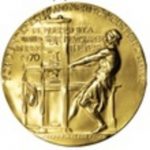
Before Shadid went to the Times, he spent seven years with The Washington Post, for which he won two Pulitzer Prizes for his extensive reporting on the Iraq war. The first, in 2004, came for his detailed painting of a country descending into sectarian chaos, such as this dispatch about Shiite clerics. In 2010, he was awarded again, this time for his reports from an Iraq still trying to pull itself after six years of war.
Obituaries of Shadid have frequently led with appreciations for his “lyrical” style. One need only read a few of his pieces to recognize this quality—Shadid’s prose was immersive, sometimes elegiac, but never maudlin. Shadid’s final year of work, covering the Arab Spring protests in Egypt, Libya, Syria and elsewhere was required reading. In a narrative that has not always been kind toward journalists—Shadid, Hicks and two other Times colleagues were kidnapped for six days last March by forces loyal to Libyan dictator Moammar el-Qaddafi—it will be odd reading the continuing history of Middle Eastern uprisings without Shadid’s voice.
Shadid’s former colleagues at the Post are offering some of their thoughts today, too. From senior correspondent and associate editor Rajiv Chandrasekaran:
He spent days on end in Najaf’s labyrinthine alleys, gazing into seminaries and seeking out the most influential religious leaders of Iraq’s newly empowered majority sect. He grasped long before any other journalist, and well before the American officials cloistered in the Green Zone, that the new center of power in Iraq rested with the grand ayatollahs of Shiite Islam. He called them the men with “ten-gallon turbans,” and he wrote the most vivid, insightful pieces about them, usually composed on deadline — on a Saturday afternoon for the Sunday Washington Post — fueled by two packs of Marlboro lights.
He banged out lines like this: “Ahead of him was the future of a country where Sadr’s followers are seeking to turn his legacy into power and, en route, discover the elusive intersection of religion and politics that has bedeviled the Muslim world for a generation.”
It was vintage Shadid. Eloquent and prescient. Graceful and gripping.
Former correspondent Omar Fekeiki:
His stories about the day-to-day life in Iraq, my country of birth and my residence for 28 years, were so rich and full of information that I actually studied them. He taught me a lot about my country. The news of his departure is terrible for everyone who appreciates real journalism, let alone people who knew him and worked with him. A gentle soul and a great mentor, Anthony left a great legacy behind. I know I should not be sad that he’s gone, because people like him have a place in heaven, and he won’t be forgotten. But I will always feel sad that I won’t find his byline in the newspaper, that I won’t be able to ask for his advice. It’s our loss.
Former foreign editor David Hoffman:
Anthony Shadid’s magic was reporting. Everywhere he went, he absorbed stories about people and their trials. Once when he was working on his second book, Night Draws Near, we had a long talk about how to do it. And I saw how he did it: bundles of notebooks from Iraq, thousands of pages — stories, impressions, smells and sights. One young girl’s diary about those terrible days of war became part of the book, but the diary came to life in his hands.
…
Anthony was extremely sensitive to the dangers of war reporting. For all his extraordinary journalism amid conflict, he hated the violence. Once, he passed through a tense checkpoint in Iraq only to see the cars behind him hit with a rocket-propelled grenade. He called me soon afterwards, voice trembling, and as he told the story, I knew how deeply he prized life.
Shadid is survived by his wife, Nada Bakri, also a Times correspondent, two children, his parents, brother and sister.