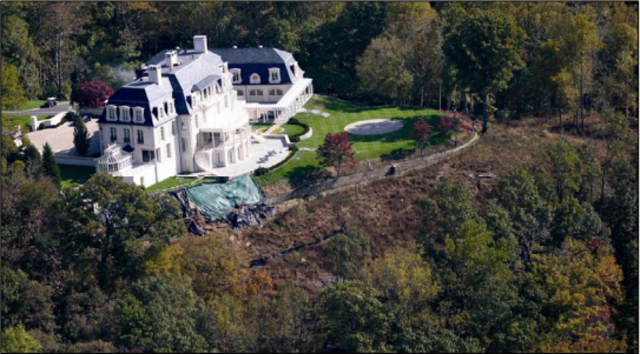
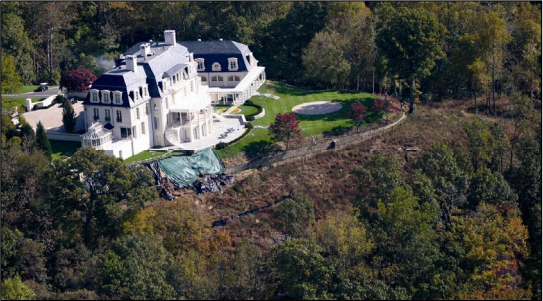
 Dan Snyder’s house in Potomac, Md. (U.S. Department of the Interior)
One of the most memorable entries in the City Paper’s exhaustive November 2010 “Cranky Redskins Fan’s Guide to Dan Snyder” was the one dealing with the team owner’s need for an “Unobstructed View” of the Potomac River from his Montgomery County estate. “To accomplish this, he cut down trees protected by the National Park Service,” Dave McKenna wrote.
The incident was more memorably referenced in McKenna’s lede as the incident in which Snyder “made a great view of the Potomac River for himself by going all Agent Orange on federally protected lands.”
Well, the fans weren’t the only ones made cranky by Snyder’s desire for a better view. WTOP spoke yesterday with Robert M. Danno, a ranger with the National Park Service who tried to speak up against what he saw as an “illegal deal” that allowed the Redskins’ owner to clear more than an acre of federally protected woods.
In retaliation, Danno says he faced harassment, demotions and career roadblocks from his superiors at the park service. He’s written a book about the ordeal, Worth Fighting For (A Park Ranger’s Unexpected Battle Against Federal Bureaucrats and Washington Redskins Owner Dan Snyder) ($24.95, Honor Code Publishing). Besides the lengthy title, Danno told WTOP he hopes the book will compel his agency to “do some serious introspection and reevaluate its course.”
Here’s Danno’s version of events:
Danno says he first called a tip line for the Inspector General’s Office at the Department of the Interior—NPS’ parent federal agency—alleging Kevin Brandt, superintendent of the park service’s Ohio Canal National Historic Park, improperly allowed Snyder to cut down the acreage affronting his property in 2004.
This prompted an IG investigation. It concluded in January 2006 the park service had failed to follow its own guidelines.
In the summer of 2004, a memo from an NPS team assigned to review Snyder’s request to remove invasive, non-native species stated “the best approach to restore the site…would be to allow natural succession to occur by permitting all native vegetation to grow to it’s full potential and to remove exotic species as they compete with native plants.”
“Snyder, in addition to cutting all exotic species within the 200-foot easement, cut all of the native species, whether healthy, diseased, injured or considered hazardous,” according to a note in the report from an IG agent.
The inspector general’s report also found that high-ranking NPS officials helped Snyder circumvent federal land protections and an agency spokesman would later say that some protected trees were cut down “by mistake.”
Federal prosecutors never took up the case, and Snyder wound up paying just a $1,000 fine to Montgomery County. Oh, and he now sits on the Forest Conservation Advisory Committee.
Meanwhile, the rest of us—fans, tree enthusiasts, Robert M. Danno—are just as cranky as ever.