Martin Austermuhle
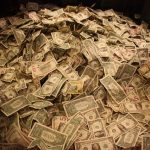
 Photo by ssteege1.
We all know that D.C. is a government town. That status is among the reasons that we weathered the recession better than most—while jobs may have dried up elsewhere and the housing market crash, the impacts were felt less intensely locally.
But the city’s insulation from the effects of a sputtering economy may start becoming a lot more obvious in the coming year. As D.C. officials discuss Mayor Vince Gray’s 2013 budget, D.C. CFO Natwar Gandhi has warned that the city’s recovery is tenuous—and may well be shaken by cuts in federal spending expected to take effect in 2013.
In a letter assessing revenue projections sent to Gray in late February, Gandhi had good and bad news. The good news? The expected federal government cuts seemed to be less severe than expected, falling from 8.5 percent to 6.5 percent. The bad news? Those cuts would still cost the city some $24 million in Fiscal Year 2013, $61 million in 2014, $71 million in 2015, and $73 million in 2016. “The federal government will no doubt continue to anchor the District’s he economy,” he wrote, “but given the current budget scenarios, it can no longer be counted on to be a source of real growth.”
Those cuts—known as sequestration—affect everything from taxes to occupancy rates at local hotels. Some 45,000 D.C. residents work for the federal government, and in 2010 the feds put $62 billion into the city in the form of salaries, procurement, grants, and benefits. (All told, that’s 60 percent of the city’s gross state product, above the 30 percent for Maryland and Virginia.) Less government spending also means fewer people traveling here, renting offices, and so on. (This won’t only apply to D.C.—as the Washington Business Journal and Governing have reported, surrounding counties in Maryland and Virginia will also be affected.)
Of course, it’s not all awful news. The shrinking federal government and the impact it will have on D.C. doesn’t spell the end of the world, but rather means that the city will be like its many counterparts throughout the country—outside the bubble. Just how many drinks will we all have to have or speeding cameras installed to close those budget gaps?