 Images courtesy of Andrew Baker
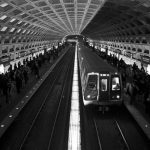
When they were little kids, if Andrew Baker and his sister were misbehaving, their father would drag them to the King Street Metro station and they would ride the trains for a while to settle down. Crossing the Potomac on the Blue or Yellow lines, Andrew’s face would be glued to the window.
“I am definitely one of those people where transit was always in my blood,” he says.
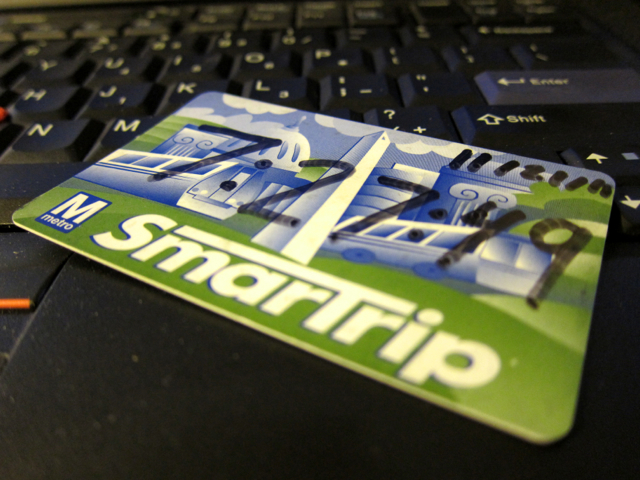
Today, Baker, 23, is still obsessed with Metro. So much that last November, when he was between jobs, he spent a day traversing the entirety of the 86-station system and recording his journey as the first entry in what he is calling the D.C. Metro Challenge, a contest to find the fastest possible time to visit every stop on every line.
Call it The Cannonball Run with a SmarTrip card.
Seven hours 27 minutes and 49 seconds—that’s the mark Baker set for himself. But he probably could have shaved a bit off had he not forced himself to double back so much.
Baker, an information technology consultant who lives in North Cleveland Park, started his trip at the Van Ness station. He took the Red Line out to Shady Grove in the morning, against the flow of rush-hour commuters, then exited and re-entered the system for the rest of his experiment.
“Things got interesting coming back into the District getting stuck behind delayed trains,” he says. From Shady Grove, it was down to Metro Center, where he switched to the Orange Line for the long ride out to Vienna/Fairfax-GMU. After that, he turned around until Rosslyn, where he hopped on the Blue Line toward Franconia-Springfield. Baker reversed again, met up with the Yellow Line and re-entered the District at L’Enfant Plaza, where he caught the Green Line. The entire route was very hub-and spoke. He’d ride toward one end of a line, then flip back until the train arrived at a transfer station near the heart of D.C.
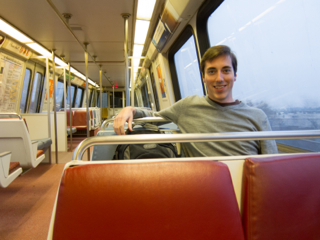 Baker, somewhere on the Blue Line.
Of course, past the question of why Baker would devote himself to visiting all 86 stations in one go is the pressing matter of just how he survived. Metrorail’s regulations are famously prohibitive toward sustenance. No food. No beverages. And there’s nary a public bathroom in sight throughout the system.
“I’m happy to say I did not have to break any of the rules,” he says. He ate a hearty, dehydrating breakfast before hopping on at Van Ness, and managed to hold it in for the next seven-and-a-half hours.
Baker says his on-board experience was fascinating. “Lots of people trying to get work done,” during the hustle and bustle of rush hour, and plenty of sightseeing to be had on those long, lonely trips out to the suburbs in the middle of the afternoon when the trains are mostly empty.
“I was honestly just looking out the window,” he says. “Greenbelt, College Park was most scenic part of the trip. Everything was very green and lush.”
Baker’s completist attitude toward Metrorail takes its inspiration from similar endeavors in other cities. Several successful attempts have been made to cover the whole circuit of the New York City Subway, most recently in 2009 when two friends hit all 468 stations in just under 23 hours.
But that record is currently being chased by a pair of visitors from England who are quite accomplished in the oddball world of competitive transit riding. One, Adham Fisher, rode the entirety of Chicago’s “L” in nine hours 30 minutes and 59 seconds, while his partner, Andy James, needed just 16 hours 29 minutes and 13 seconds to hit every stop in the London Underground. They’re now developing an app to help users find the quickest way to circumnavigate the Subway.
Back in Washington, Baker has already taken on several challengers of his own, with a few visitors to his blog threatening to find a faster way to visit all of Metrorail. He says he wants it to be competitive not just for the sport of it, but also to get people excited about public transit in general.
“I do think that mass transit can be an incredible force for good,” he says. “Ideally we could schedule a lot of people at once. Amazing Race-style where people start at different ends and compete against each other.”
Not that he’s totally thrilled with the current state of the Washington Metropolitan Area Transit Authority. Though Baker spent only 30 to 45 minutes out of his long journey waiting for trains, he’s well aware the agency could always be better in alerting riders to delays and maintenance.
“What I’m most looking for from WMATA these days is increased transparency,” he says. “I think they’ve been making some strides lately with announcing track work. I want to take pride in my Metro system.”
That said, he did run into his “fair share” of Metrorail’s notoriously out-of-service escalators during his November run.
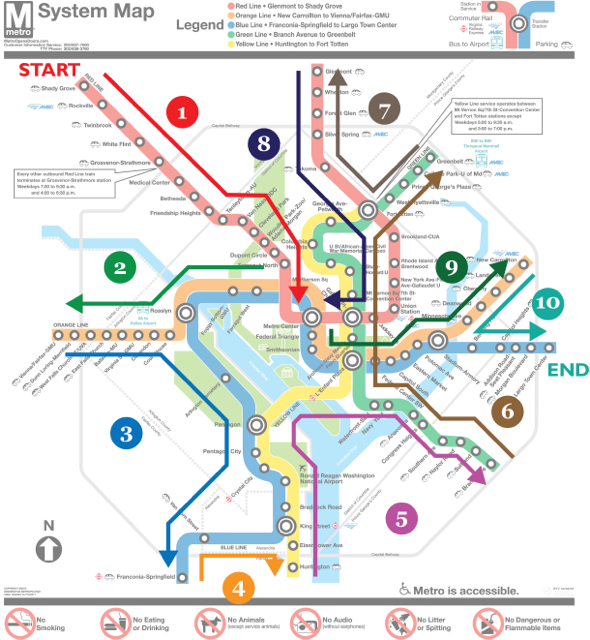 Baker’s route.
Perhaps someone will find a quicker way around the system. One Reddit user has postulated a route estimated to take just over six hours and featuring far less doubling back than Baker’s approach.
But his competitive streak aside, Baker sees Metro as a great equalizer for the Washington area’s residents.
“For some reason, I think especially newcomers glom on to the Metro map for their socioeconomic status,” he says. “But it was all kinds of people riding all lines at all stations.”
Not that Baker relies solely on public transportation himself. He’s got a car for when he needs to visit a client beyond Metrorail’s reach. Sometimes, he has to drive out to Herndon. On the way, he finds himself staring longingly at the construction of the Silver Line, still over a year from being operational.
“And I was wishing every day when I was stuck on 495 that the Silver Line was up and running to take me there,” he says.