Martin Austermuhle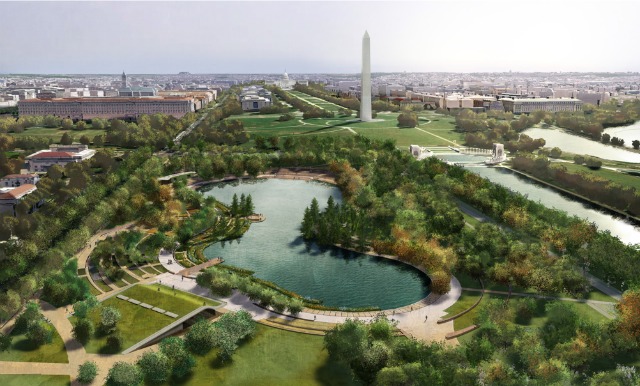
A amphitheater at the base of the Washington Monument. A glass-enclosed restaurant overlooking the Constitution Gardens pond—and a winter-time ice-skating rink where the pond currently sits. A lively new Union Square, with streams of water arching into the Capitol Reflecting Pool.
Those are among the ideas that architects and designers have floated for redesigning and reviving three sites on the National Mall—Constitution Gardens, the Sylvan Theater on the Washington Monument grounds and Union Square—as part of a competition sponsored by the Trust for the National Mall. Working with the National Park Service and private donors—the projects could cost some $350 million—today the trust has made public the 12 design proposals for the three sites, hoping to gather public comments ahead of May announcement of the winners.
None of the design proposals—you can view them all here—radically change the sites, more than make them more engaging to the public. (And they need it—last year the National Mall was ranked high on a list of failed public spaces.)
The proposals for Constitution Gardens, for one, still focus around the pond that lies north of the Reflecting Pool, seeking to better attract visitors with a restaurant and attractive new walkways along the water’s edge. Union Square would take on a more Parisian feel, with chairs inviting passers-by to sit down and new landscaping and fountain to brighten up an otherwise drab stretch of marble at the base of the U.S. Capitol. New terraces at the base of the Washington Monument would create an amphitheater for a renovated and rejuvenated Sylvan Theater, encouraging more visitors to take in a concert on the grounds of the National Mall.
The proposals go on display today through April 15—the ones for Constitution Gardens and the Washington Monument will be at the National Museum of American History, while those for Union Square will be at the Smithsonian Castle. (Despite control over Union Square having been transferred from the National Park Service to the Architect of the Capitol recently, the competition’s organizers say they’ll forward along the winning proposals to Congress.)
In related news, today the Post’s editorial board came out in favor of Frank Gehry’s controversial design proposal for the Eisenhower Memorial. Architect Roger K. Lewis somewhat differs, writing that Gehry should shrink his site and maybe rethink the 80-foot-tall metal screens that he envisions as a frame for the memorial.