Martin Austermuhle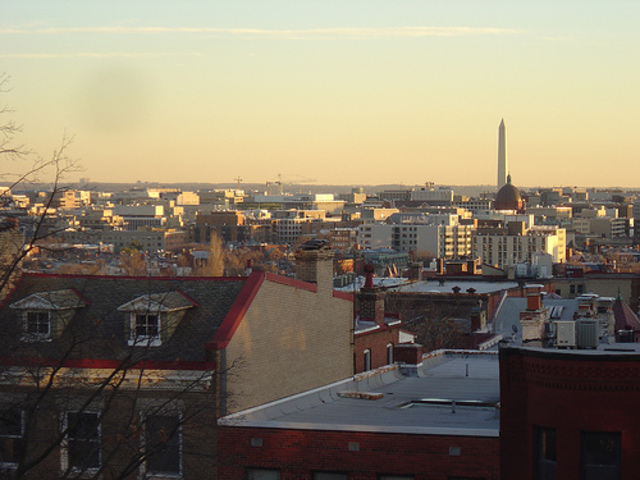
 Photo by Cickatoes
Lovers of a low-to-the-ground D.C., you have a powerful ally in your midst—D.C. Del. Eleanor Holmes Norton today released a statement in which she seemed to back existing restrictions on how high buildings in the city can get.
“The discipline embedded in the Height Act accounts for the distinctive look that sets the District of Columbia apart from any other city in the world,” she said in the statement, which comes in response to reports that Rep. Darrell Issa (R-Calif.) and Mayor Vince Gray have entered into discussions about relaxing the height restrictions.
Currently, buildings on commercial streets can be up to 20 feet taller than the width of the facing street, up to 130 feet. On residential blocks, it’s no more than 10 feet taller than the width of the street up to 90 feet high. (Structures on Pennsylvania Avenue between First and 15th streets NW can be up to 160 feet tall.) Urbanists have long complained that this has made D.C. less dense and as a consequence more expensive; proponents argue that it maintains a Paris-like skyline and feel for the city.
Norton didn’t completely close the door to changes, though, but she only elusively hinted that changes to the Height Act outside of the city’s monumental core would pass muster with her. “No idea is beyond examination but the implications range from technical to profound,” she said. “As the Mayor, City Council, city planners, economic and other experts, and particularly residents consider this issue, I have confidence that they will understand best the delicacy of this matter of historic importance.”
Her full statement is below:
“Since this week’s reports quoting Oversight and Government Reform chairman Darrell Issa (R-CA) on the Height Act, I have received a number of inquiries concerning my views. My support for the Height Act remains as strong as ever. The discipline embedded in the Height Act accounts for the distinctive look that sets the District of Columbia apart from any other city in the world. Both the livable scale of our city and the vistas that feature its unique historic monuments and sites depend upon maintaining the Height Act discipline that flows naturally from L’Enfant’s original vision and the McMillan Plan. The common understanding that our identity as a city depends on the Height Act is so strong that no one has approached my office about changes in the heights of buildings permitted here.
However, Chairman Issa has raised with Mayor Gray and me the question of adjustments outside of the monumental core of the city. To his credit, Rep. Issa has not proposed that his committee proceed but has recognized the profound home rule implications of such a change. No idea is beyond examination but the implications range from technical to profound. As the Mayor, City Council, city planners, economic and other experts, and particularly residents consider this issue, I have confidence that they will understand best the delicacy of this matter of historic importance.”