DCist’s highly subjective, thoroughly uncomprehensive guide to the most interesting movies playing around town in the coming week.
—
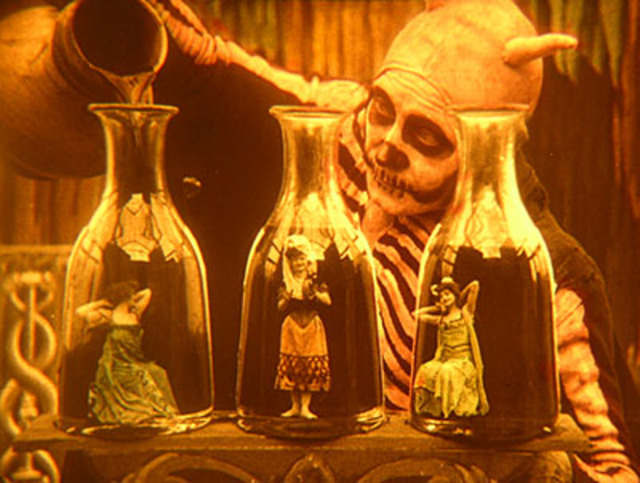
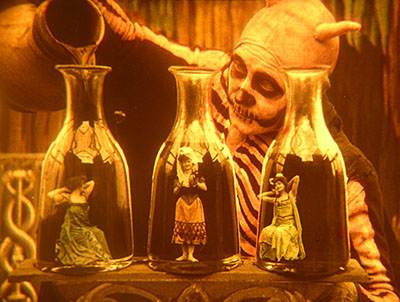 Segundo de Chomón, “Le Spectre Rouge” (1907)
Cine-concert: Segundo de Chomón Shorts
What it is: A Spanish silent film maker’s surreal “trick” films, with live musical accompaniment.
Why you want to see it: To celebrate the opening of their exhibit, Joan Miró: The Ladder of Escape, the National Gallery presents the inventive short films of Segundo de Chomón. The Spaniard’s work appeared in such silent landmarks as Cabiria and Abel Gance’s legendary multi-screen Napoleon, and has earned him comparisons to French filmmaker Georges Méliès, the inspiration for Martin Scorsese’s Hugo. The program is also a showcase for new musical scores composed by young composers from New York University’s prestigious Steinhardt Film Scoring Program. Members of the National Gallery Orchestra will perform the scores, conducted by Gillian Anderson. Also this weekend the Gallery wraps up its Japanese Divas series with Akira Kurosawa’s brilliant staging of Macbeth, Throne of Blood (Friday, May 4 at 2:00 pm), Flowing (Saturdy, May 5 at 1:00 pm), director Mikio Naruse’s study of relations in a geisha house; and Yasujiro Ozu’s first color film, Equinox Flower (Sunday, May 5 at 3:30).
View “The Electric Hotel.”
Cine-concert: Segundo de Chomón Shorts screens Sunday May 6 at 4:30 at the National Gallery. Free.
—

What it is: The African immigrant experience in New York.
Why you want to see it: A 21-year-old Senegalese comes to New York in search of a better life. What he finds is a predictable blend of music, violence, and love. Nigerian-born director Andrew Dosunmu made his name as a fashion photographer. His 2000 documentary Hot Irons looked at the African-American hairstyling culture of Detroit, but the director moved on to more serious subject with the television series Yizo Yizo, about an all-black high school in Johnannesburg. For his fiction feature debut, Dosunmu hired a fantastic cinematographer in Bradford Young, who bathes this film in a gorgeously muted palette. If only the cliched script lived up to the visual narrative.
View the trailer.
Opens tomorrow at the West End Cinema. Director Andrew Dosunmu will appear for Q&A after the Friday May 11 screenings.
—
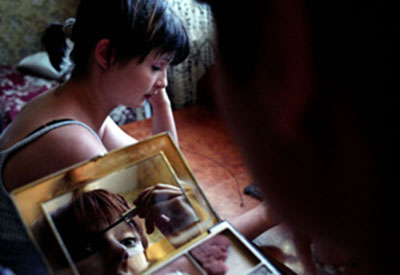
What it is: A harrowing documentary about Eastern European sex trafficking.
Why you want to see it: “Emmy-nominated photojournalist Mimi Chakarova, who grew up in Bulgaria, takes us on a personal journey — exposing the shadowy world of sex trafficking from Eastern Europe to the Middle East and Western Europe. Filming undercover and gaining extraordinary access, Chakarova illuminates how even though some women escape to tell their stories, sex trafficking thrives.” Presented by the Human Rights Watch Film Festival.
View the trailer.
Wednesday, May 9 at 7:00 at the West End Cinema. $11. A Q&A with film maker Mimi Chakarova follows the screening.
—
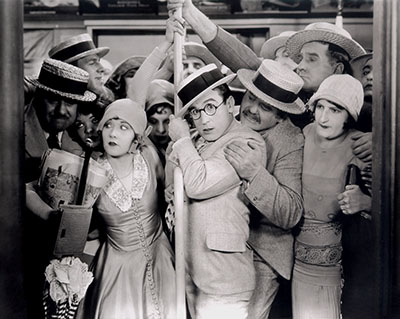
What it is: The last film by one of the great silent movie comics, with live musical accompaniment.
Why you want to see it: Harold Lloyd is not as well known today as Charlie Chaplin or Buster Keaton, but as the silent age gvae way to talking pictures, he was more popular than either of them. Find out why in this rare screening of a 1928 film shot on location in New York City, with a cameo by iconic Yankee Babe Ruth. Live musical accompaniment will be performed by the Alloy Orchestra.
View a clip.
Saturday, May 2 at 2:00 pm. At the AFI. $15.
—
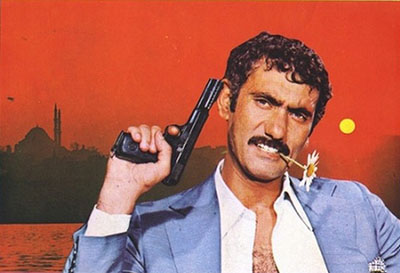 Yilmaz Güney
 The Way Home: The Films of Turkish Master Yilmaz Güney
What it is: The Freer gallery and the Goethe-Institut showcase a visually inventive and politically controversial Turkish director.
Why you want to see it: Yilmaz Güney has inspired a generation of Turkish filmmakers, including Turkish-German director Faith Akin (Head-On), who’s working on a biopic, and Nuri Bilge Ceylan, whose excellent Once Upon a Time in Anatolia comes to E Street on May 11. According to the Freer, “this retrospective traces Güney’s remarkable career trajectory, from a popular leading man to a filmmaker so politically dangerous the Turkish authorities threw him in prison. ” This weekend’s screenings at the Freer include The Hungry Wolves (1969), the story of a bandit in a snowy landscape that recalls Sergio Leone’s spaghetti westerns; and The Poor (1974), a harrowing tale of the Turkish prison system whose production was interrupted when the director was himself imprisoned. See the Goethe-Institut’s schedule of Güney programs here.
View the trailer for Hungry Wolves.
Hungry Wovles screens Sunday, May 6 at 2:00 pm. The Poor screens Sunday, May 6 at 4:00 pm. At the Freer Gallery. Free.
—
Also opening this week, two ensemble casts with zero demographic overlap: elderly Brits retire to India in The Best Exotic Marigold Hotel; and Americans save the world in The Avengers. We’ll have full reviews tomorrow.