Martin Austermuhle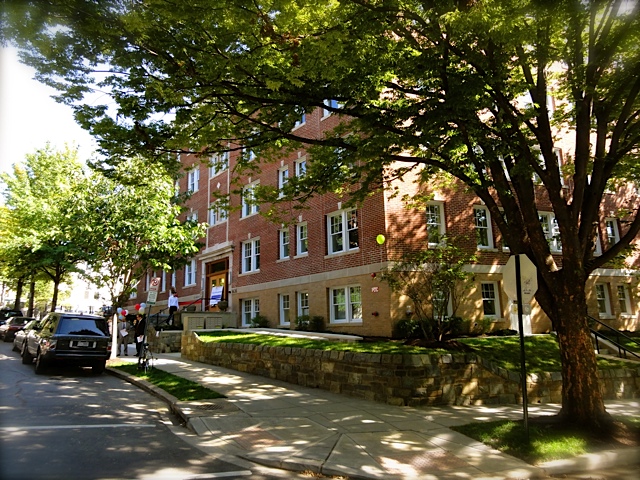
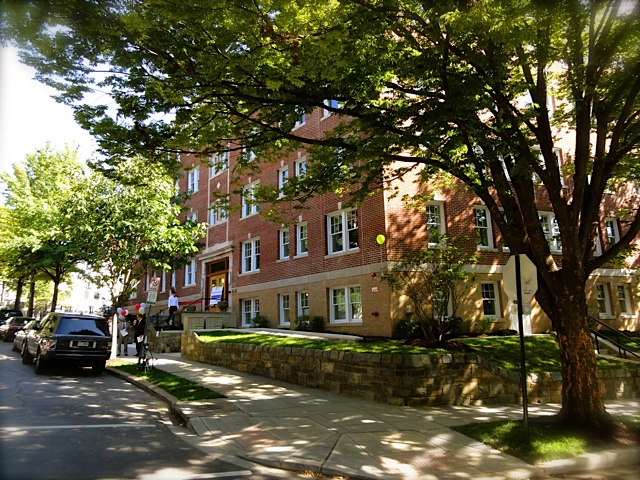 A newly renovated St. Dennis reopened in Mt. Pleasant last year after receiving funds from D.C.’s Housing Production Trust Fund.
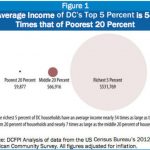
Not only is the gap between the richest and the poorest growing in D.C., but it’s becoming increasingly more difficult to find low-cost housing in the city.
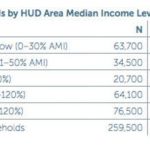
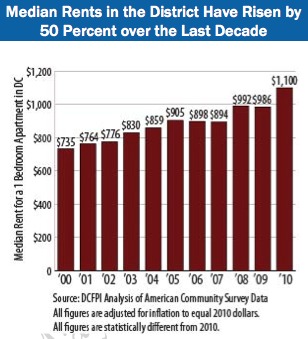
According to a report published today by the D.C. Fiscal Policy Institute, D.C.’s stock of affordable housing has fallen by 50 percent over the last decade while low-value homes—those costing less than $250,000—have declined by 72 percent. All told, 50 percent more one-bedroom apartments cost $1,100 a month today than they did in 2000, while the number of apartments with rents and utilities of under $750 fell dramatically, from over 70,000 units in 2000 to just over 34,000 in 2010. Additionally, incomes are not keeping pace with housing costs, and one in five D.C. households spends more than half their income on housing.
Other outtakes from the report: while home values fell during the recession, they still remain higher than they did in the early 2000s. Mid-cost apartments remained flat during the decade from 2000-2010, while high-cost apartments—where rent and utilities are over $1,500—more than tripled.
 The report, which falls in the midst of D.C.’s budget season, states simply that D.C. is becoming harder to afford and that aggressive government action is needed to save affordable housing options. “The combination of rapidly rising housing costs and stagnant incomes will only make more difficult for low- and moderate-income residents to live in the District. Since the private market produces little affordable housing on its own, it is critical for the District to support the creation and preservation of affordable housing,” it states.
Things aren’t looking up for the cause, though. Over the last two years, funds for the D.C. Housing Production Trust Fund—whose mission is to protect and provide affordable housing—have been cut by $38 million. (In one example of its use, the fund helped pay for renovations to Mt. Pleasant’s St. Dennis last year.) Moreover, funding for the Home Purchase Assistance Program is being cut by $5 million and the Housing First and Local Rent Supplement programs are being kept level for 2013.
The report advocates for D.C. setting aside more money for the Housing Production Trust Fund and for rental and home-buying assistance, as well as working with developers to ensure that affordable units are built on city-owned plots of land. For the City Paper’s Lydia DePillis, though, D.C. also has to revisit its height restrictions and add more flexibility in zoning rules to allow for more density.
The Housing for All coalition has been pushing the D.C. Council to increase funds for affordable housing in recent weeks. The Coalition for Nonprofit Housing and Economic Development will be pushing for more affordable housing during its annual advocacy day at the Wilson Building on May 9. The D.C. Council will vote on the budget on May 15, so any changes to Mayor Vince Gray’s budget will have to be made by then.