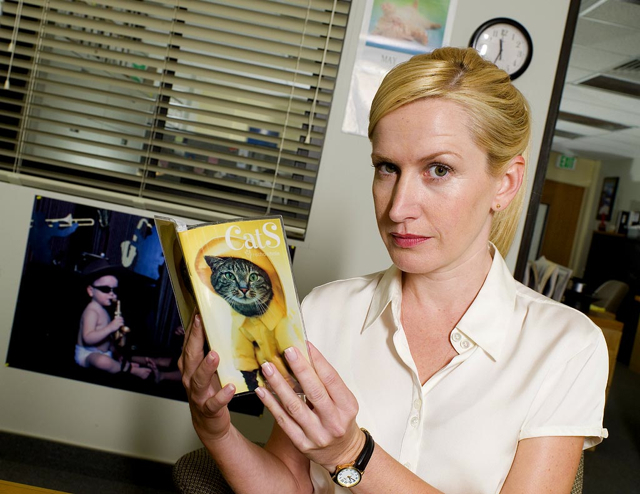
 Angela Kinsey as Angela Martin in The Office. (NBC Universal)
When she’s not in character as the endlessly moralizing Angela Martin on NBC’s The Office, Angela Kinsey seems quite pleasant. But while her character is constantly worried about upholding some kind of latter-day puritan lifestyle, Kinsey’s own policy passion is seafood.
Fraud, specifically. Kinsey dropped by Capitol Hill yesterday to join toque-about-town Barton Seaver in asking lawmakers to strengthen regulations against shoddy seafood labeling, Washingtonian reported. The visit was sponsored by Oceana, which has made combatting the mislabeling and up-selling of bad fish one of its highest priorities.
Too many restaurants, Kinsey and Seaver warned, often pass off subpar products as superior catches—Venezuelan shellfish masquerading as “Maryland crabcakes,” as Washingtonian suggested. To that end, what can the cautious seafood lover do when dining out?
Ask a lot of questions, Kinsey said. It’s not unlike that Portlandia sketch in which Fred Armisen and Carrie Brownstein make so many queries of their waitress about the origins of their dish that they wind up indentured to a cult-like farmer.
But aside from endless hectoring of the waitstaff, what can people do to detect seafood fraud? Oceana advises the following:
- Seafood fraud can directly threaten human health. Swapping one fish species for another that may be riddled with contaminants, toxins or allergens can make people sick.
- Seafood fraud creates a market for illegal fishing by making it easy to launder illegally caught seafood products through the U.S. market. This undermines conservation efforts to prevent overfishing and accidental capture of at-risk species and hurts honest fishermen.
- Mislabeling fish makes it difficult for consumers to make eco-friendly choices. Market-driven conservation efforts depend on the consumer’s ability to make an informed purchase of particular species. This effort becomes nearly impossible when fish are mislabeled.
- Seafood fraud misleads consumers about the true availability of seafood and the state of the marine environment. Because mislabeling maintains the appearance of a steady supply of popular fish species despite severe overfishing, the general public is unaware that the species is in serious trouble.
Seems like there are a lot of fishy machinations at play in the seafood business.