Martin Austermuhle
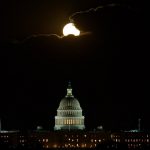
 Photo by Chris Rief aka Spodie Odie
Yesterday the D.C. Council passed a $9.4 billion 2013 budget on a first vote; a second and final vote will come on June 5. The council’s spending plan for the coming fiscal year made a number of changes to the proposal presented by Mayor Vince Gray in late March, though much of what Gray proposed remains. Here are some of the things you should know for the 2013 fiscal year, which starts in October.
>> No new taxes.
>> Good news for affordable housing in D.C., which is quite scarce these days—D.C. Council Chair Kwame Brown reinstated $18 million dollars to the Housing Production Trust Fund and added $4 million to a local rent subsidy program and $2.5 million to the Home Purchase Assistance Program.
>> Gray and Councilmember David Catania (I-At Large) worked together to save $20 million in funding for the D.C. Healthcare Alliance, a program that offers health care to 19,000 undocumented immigrants in the city.
>> Bars won’t be able to stay open an hour later on weekdays and weekends, as Gray had proposed, but will instead enjoy extended hours on 19 days, including the weekends coinciding with New Year’s Eve, Memorial Day, Independence Day, and Labor Day. (Longer hours will also come with the next two presidential inauguration weekends.) Councilmember Mary Cheh (D-Ward 3) included an amendment that would require Gray to report on how the extended hours affect D.C. neighborhoods. Liquor stores will remain shuttered on Sunday, but booze retailers—including supermarkets, corner stores and liquor stores—will be able to open two hours earlier than usual, at 7 a.m.
>> In other booze news, the budget will allow distilleries to sell their spirits directly to consumers. The owners of New Columbia Distillers, who we spoke to a few months ago, pushed for this change so they could host tasting and sell their gin and whiskey once they start operations in the next few months.
>> This budget finally takes the steps necessary to centralize debt collection in D.C. What does that mean for you? Well, if you’ve got overdue tickets, fines or fees, D.C. might soon get a lot better at coming to collect. In related news, Cheh worked in an amendment that will increase the capacity of the Traffic Adjudication Appeals Board, thus making appealing a ticket a much less lengthy process.
>> If this isn’t enough to convince you to pay your tickets, D.C. might just take the money from you. The council “authorizes the Chief Financial Officer to deduct from a taxpayer’s refund any delinquent taxes, fees, fines, or other liabilities that the taxpayer owes to the Department of Motor Vehicles.”
>> As the City Paper recently detailed, the University of the District of Columbia is smaller than ever before—but it still costs more to operate than many of its state-run peers. The council is requiring that UDC “develop a plan to reassess its tuition rates [and] downsize faculty.”
>> The council proposes the establishment of of a task force to “study the concept of a neighborhood preference for charter school admissions for the 2013- 2014 school year.” Additionally, by the 2014 fiscal year, D.C. public schools and public charters schools will have to be provided services on an equal basis.
>> Performance parking is going to expand citywide. What is performance parking, exactly? It’s basically market-based rates for on-street parking; the more need there is for parking in a certain neighborhood at a certain time, the more it will cost. Performance parking is already in effect around Eastern Market and Columbia Heights.
>> Despite complaining that maybe the city is going a little overboard with all the traffic cameras, the D.C. Council did nothing to Gray’s plan to expand their use. The new cameras—which will check for everything from speeders to people to illegally turn on red—are expected to bring in some $30 million. There has been talk of studying the city’s fine schedule to see if fines for some offenses can be lowered, though.
>> Cab fares just went up, but the 2013 budget allows for the imposition of a 50-cent surcharge to help fund the D.C. Taxicab Commission and an ambitious modernization of the city’s taxicab fleet.
>> At Gray’s prodding, the council’s version of the budget includes all sorts of great provisions on budget and legislative autonomy. From now on, D.C. will be able to set its own fiscal year, adopt its budget without congressional approval and shortens the congressional review period from 30 “session” days to 30 calender days. Yay, right? Well, this is all fine and good, but it’s symbolic. Congress only approves the spending levels set by the D.C. Council, not the entirety of the budget. As such, all these pro-budget autonomy provisions can’t become law unless Congress approves them as separate pieces of legislation.
>> And then this, from a press release from Cheh’s office: “The creation of the Fort Circle Trail, linking the historic Civil War forts that surround the District.”